

One shot can cause permanent hearing damage - so I wouldn’t choose shooting protection by its rating alone. I’d check gunfire test data, fit plugs correctly and wear earmuffs over them, as NIOSH recommends for shooters. <u>Never subtract NRR from a gunshot’s peak level or add plug and earmuff ratings together.</u>
Here’s what I’d check before shooting:
- Ratings: NRR, SNR and Australia’s SLC80/Class 1–5 system aren’t interchangeable. Look for impulse-noise test results for the exact model and filter.
- Protection type: Comparing custom earplugs vs. foam earplugs, foam plugs depend on correct insertion; earmuffs need an unbroken seal; custom plugs depend on both fit and filter choice. A custom fit doesn’t automatically mean more protection.
- Your setup: Check glasses, headwear and stock clearance. Keep protection fitted throughout exposure, indoors or outdoors.
- Care and hearing: Follow cleaning instructions, replace damaged parts and review fit. Seek assessment for ringing or muffled hearing - and urgent medical care for sudden hearing loss.
For ACS Custom plugs, I’d confirm the supplied filter’s test data rather than treat its 10–27 dB figure as an NRR or proof of shooting safety.
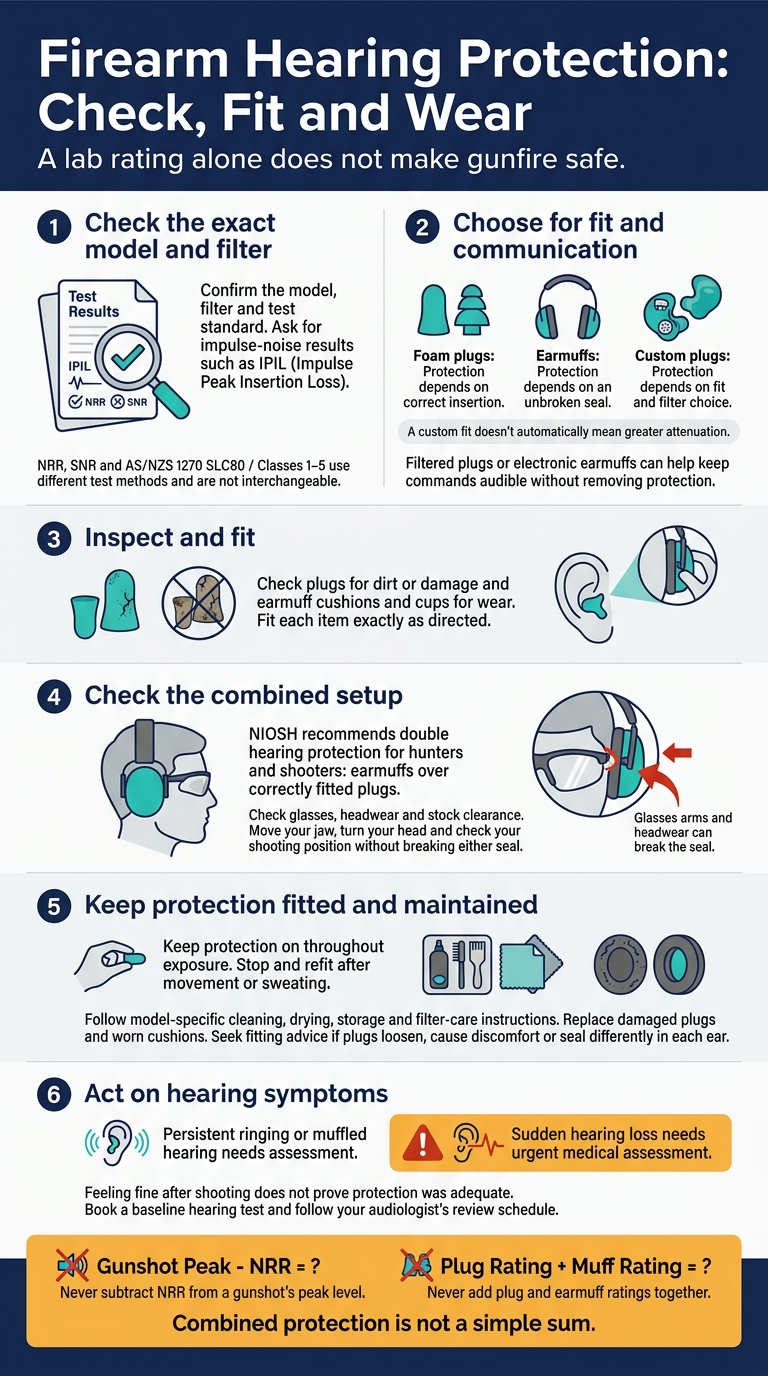
Firearm Hearing Protection: Check, Fit and Wear
How to Choose the right "Hearing Protection" / Understanding the Noise Reduction Rating (NRR)
sbb-itb-80b2a19
How NRR Works for Shooting
NRR is a lab-tested attenuation rating in decibels. It does not tell you how much sound reaches your ear during gunfire. The number on the label and the protection you get at your ear are different things.
NRR, SNR and AS/NZS 1270 SLC80 and Classes 1–5
NRR, SNR and AS/NZS 1270 use different test methods, so you can’t directly swap one rating for another.
| Rating system | Key distinction |
|---|---|
| NRR - Noise Reduction Rating | Attenuation rating based on US laboratory testing. |
| SNR - Single Number Rating | Attenuation estimate using the ISO/European method. |
| AS/NZS 1270 - SLC80 and Classes 1–5 | Australian/New Zealand attenuation rating grouped into protection classes. |
Check the exact model, any filter and the test standard. For shooting, prioritise impulse results such as IPIL (Impulse Peak Insertion Loss). These give different information from NRR, SNR or SLC80. Treat any calculation as a rough guide - not a shooting safety check.
Derating Calculations: Uses and Limits
For continuous workplace noise only, one derating method estimates usable attenuation as (NRR − 7) ÷ 2. This estimate does not measure sound inside the wearer’s ear.
Do not use this calculation to prove shooting safety. Gunfire’s impulse peaks, frequency content and reflections mean it cannot predict firearm peak levels at the ear when protection is worn. Never subtract NRR from a firearm peak level or add earplug and earmuff ratings together. Combined protection is not a simple sum.
Even highly rated protection can fall short if the seal is poor or other gear gets in the way.
Why Protection Can Fall Short of the Label
Fit, Seals and Equipment Interference
Fit is usually the problem - not the rating. Most losses in protection come from poor fit, lifted cushions or broken seals. Foam plugs work well only when fully seated. Earmuffs need a clean seal around the ear, too. Headwear or other gear can lift the cushions and reduce noise attenuation, so check the fit while wearing your usual shooting gear.
For ACS Custom protection, an audiologist should take impressions under video otoscopy. These should reach the second bend of the ear canal and fully fill the concha, with no voids, to help the finished plugs sit correctly and perform to their rating.
Communication and Electronic Protection
Filtered plugs can keep speech and command cues audible, so you don’t need to remove your protection and break the seal to hear them.
Hearing Protection Checklist Before Shooting
Before firing, check that plugs are fully seated, earmuffs seal cleanly, and the filter level suits the range or field. Stop and refit after movement or sweating.
With the fit sorted, the next choice is which type of protection suits the session.
Comparing Foam Plugs, Earmuffs and Custom Shooting Plugs
Protection, Fit and Comfort Trade-Offs
A custom fit doesn’t automatically mean greater attenuation. The main differences are fit, comfort, speech clarity and how each option works with glasses, helmets and stocks. Foam plugs can provide high attenuation when inserted deeply, but protection depends on fit, and they’re disposable. Earmuffs are easier to fit and inspect. Custom-moulded plugs fit your ears and may feel more comfortable.
| Type | Verified rating | Fit | Comfort | Speech clarity | Glasses and stock clearance | Cleaning | When to replace | Best use |
|---|---|---|---|---|---|---|---|---|
| Generic foam plugs | Check the product’s rating; impulse data may not be listed. | Depends on correct insertion. | Pressure and irritation vary. | Speech sounds muted. | Low-profile; little gear interference. | Handle with clean hands. | After use, following instructions. | Range or field; high attenuation when fitted deeply. |
| Generic earmuffs | Check the model’s rating. | Easy to fit and inspect. | Heat, weight and clamping pressure vary. | Passive models make speech harder to hear; electronic models can improve clarity. | Check clearance around glasses arms and the stock. | Clean cushions as instructed. | Replace worn cushions; maintain batteries if fitted. | Ranges; bulk can be inconvenient in the field. |
| ACS Custom shooting plugs | Request verified attenuation for the exact mould and filter; PRO filter dB figures are not NRR values. | Professional ear impressions. | Soft silicone for a custom fit. | Depends on the filter; PRO Impulse allows conversation. | Low-profile fit reduces gear interference. | Clean moulds and care for filters as instructed. | Review impressions every 4 years. | Range or field; PRO Impulse is designed for shooting. |
Custom plugs sit between disposable foam and hard-shell earmuffs. Filter choice and the quality of the ear impressions matter as much as the mould itself.
ACS Custom Fitting and Filter Options
ACS Custom makes custom-moulded shooting plugs using professional ear impressions and medical-grade silicone. Its PRO filters are rated from 10–27 dB, but these figures are not NRR values and don’t prove gunfire safety.
PRO Impulse is rated at about 15 dB constant attenuation and up to 33.1 dB impulse peak insertion loss under ANSI IPIL testing. Ask for verified attenuation data and certification documents for the exact shooting plug and filter.
For shooting sessions, consider wearing plugs and earmuffs together without compromising either device’s seal.
Wearing Plugs and Earmuffs Together
NIOSH recommends double hearing protection for hunters and shooters: wear well-seated earmuffs over correctly fitted plugs. Check the combined fit with your glasses and usual stock position. Neither should break the earmuff seal.
Choosing Hearing Protection for Range and Field Use
Protection for Ranges, Hunting and Instruction
Match your hearing protection to where you shoot, the noise level, how clearly you need to hear others and the fit. Wear plugs under earmuffs for indoor ranges and muzzle-braked firearms. For hunting, use impulse-filter plugs. During instruction, electronic earmuffs or filtered plugs can help keep commands clear.
| Setting | Noise exposure | Communication need | Protection |
|---|---|---|---|
| Indoor range or muzzle-braked firearms | Sound reflected within enclosed spaces or increased muzzle blast | Clear range commands | Double protection: plugs under earmuffs |
| Outdoor range | Frequent shots; nearby shooters still matter | Conversation and range commands | High-attenuation plugs or electronic earmuffs; consider double protection |
| Hunting | Usually open spaces; fewer shots | Situational awareness | Shooting-specific impulse-filter plugs |
| Instruction | Indoor or outdoor; repeated shots | Clear, reliable commands | Electronic earmuffs or filtered plugs; double protection indoors |
Check fit, seal, glasses and stock clearance with every setup. Choose protection you can wear throughout the session without losing the seal.
With your session type in mind, check the rating, filter and fit details before buying.
What to Check Before Buying
Confirm the exact model, filter and rating standard. Ask for impulse-noise data, such as ANSI IPIL, that applies to where you shoot.
Ask about fit testing and professionally taken ear impressions. For ACS Custom plugs, confirm which filter the supplied test data covers. Check that the protection works with your shooting glasses and firearm stock, and that the full setup maintains its seal under earmuffs.
Before buying, check the cleaning instructions and filter care requirements. Before shooting, check the venue’s rules for the minimum protection class.
After purchase, focus on fit, care and regular checks.
Fitting, Care and Hearing Checks
A rating only matters if your protection stays fitted and intact. Once you’ve chosen the right rating, check the fit and condition before every session.
Fit and Inspect Protection Before Shooting
Before shooting, check plugs for dirt or damage, and inspect earmuff cushions and cups for wear. Fit each item exactly as directed.
With your protection on, move your jaw, turn your head and check your shooting position. Your glasses and the stock must not break the earmuff seal. Check the plug and earmuff seals together, and keep your protection on throughout the exposure.
Comfort doesn’t guarantee a proper seal. Get professional fitting advice if your plugs loosen, cause discomfort or seem to seal differently in each ear.
Cleaning, Replacement and Fit Reviews
Follow the instructions for cleaning, drying and storing your exact model. If it has removable filters, clean the moulds and filters separately as directed. Use the supplied wax pick to remove debris from sound channels, and store dry plugs in their pouch. Replace damaged plugs and worn cushions.
For ACS Custom plugs, arrange a fit review if comfort changes or the seal weakens. If the impression is more than two years old, book a new fit review and have new impressions taken.
When to Get Your Hearing Checked
If symptoms appear, don’t assume the problem is fit. Book a baseline hearing test and follow the review schedule your audiologist sets.
Persistent ringing or muffled hearing needs assessment - not just a different filter or tighter fit. Sudden hearing loss needs urgent medical assessment. Noise damage can develop without pain or obvious symptoms, so feeling fine after shooting doesn’t prove your protection was adequate.
Conclusion: Check Ratings, Fit and Wear
A lab rating alone does not make gunfire safe. Protection depends on a secure seal and wearing the earpieces without interruption - not just the number on the label. With custom hearing protection, the fitted filter determines attenuation; the shell determines fit.
Before choosing ACS Custom shooting protection, check the product-specific spec sheet, data chart, instruction booklet and safe listening times guide for your exact earpiece and filter combination. Review continuous-noise and impulse-noise results separately, and seek fitting advice if the filters don’t suit your shooting setup.
Choose the right filter, fit it correctly and keep it seated for the whole session.
FAQs
Is there a minimum NRR for shooting?
There’s no single minimum NRR for shooting. The protection you need depends on the firearm and the noise around you. Gunfire can exceed 140 dB(C) and cause instant, permanent hearing damage. Choose hearing protection that brings exposure down to safe levels - ideally below 80 dB(A) at the ear.
In Australia, hearing protection must comply with AS/NZS 1270:2002. Always assess noise levels before choosing protection. More protection isn’t always better: over-protection can mask important instructions or sounds around you, creating safety risks.
How can I test my hearing protection’s fit?
Check that your earplugs form a complete, airtight seal in your ear canal. Give foam earplugs about a minute to expand. They should feel secure and stay in place, with no gaps or discomfort.
Professional Real-Ear Measurement (REM) or Personal Attenuation Rating (PAR) testing is recommended to confirm how much noise your earplugs actually block. Consult an audiologist if they feel loose, your hearing sounds muffled or you notice new tinnitus.
Which ACS Custom filter suits my shooting setup?
The PRO Impulse filter is designed for shooting, providing constant noise reduction of approximately 15 dB. When sudden impulse noises such as gunfire occur, protection increases to a maximum of 33 dB. This helps you stay aware of your surroundings and hear normal conversation while hunting or at the range.
The custom-moulded plugs are made from medical-grade silicone for comfort. You can also wear them under over-ear headsets for extra protection.


