

Choosing the right ear protection can save your hearing in noisy workplaces.
In industries like construction, mining, and manufacturing, workers face noise levels that exceed Safe Work Australia's limit of 85 dB(A). Prolonged exposure can lead to permanent hearing damage, including tinnitus and muffled hearing. The debate between custom-moulded earplugs and standard foam earplugs boils down to comfort, effectiveness, and value.
Key Takeaways:
- Custom Earplugs: Tailored fit, long-lasting, comfortable for extended use, consistent protection, higher upfront cost but cost-effective over time.
- Standard Earplugs: Cheap, easily available, but less comfortable, inconsistent fit, and require frequent replacements.
Quick Comparison:
| Factor | Custom Earplugs | Standard Earplugs |
|---|---|---|
| Fit | Precise, tailored to the ear | Generic, one-size-fits-all |
| Comfort | High, suitable for long shifts | Low, can cause discomfort |
| Durability | Lasts years | Disposable, replaced daily |
| Noise Reduction | Reliable, consistent protection | Varies, depends on proper use |
| Cost | High upfront, low long-term cost | Low upfront, high replacement cost |
Custom earplugs are ideal for Australian workplaces prioritising long-term hearing protection, comfort, and reduced waste. Standard earplugs, while cheaper initially, often fall short in comfort and effectiveness, leading to inconsistent use. Protecting your hearing is an investment, and custom options offer a dependable solution.
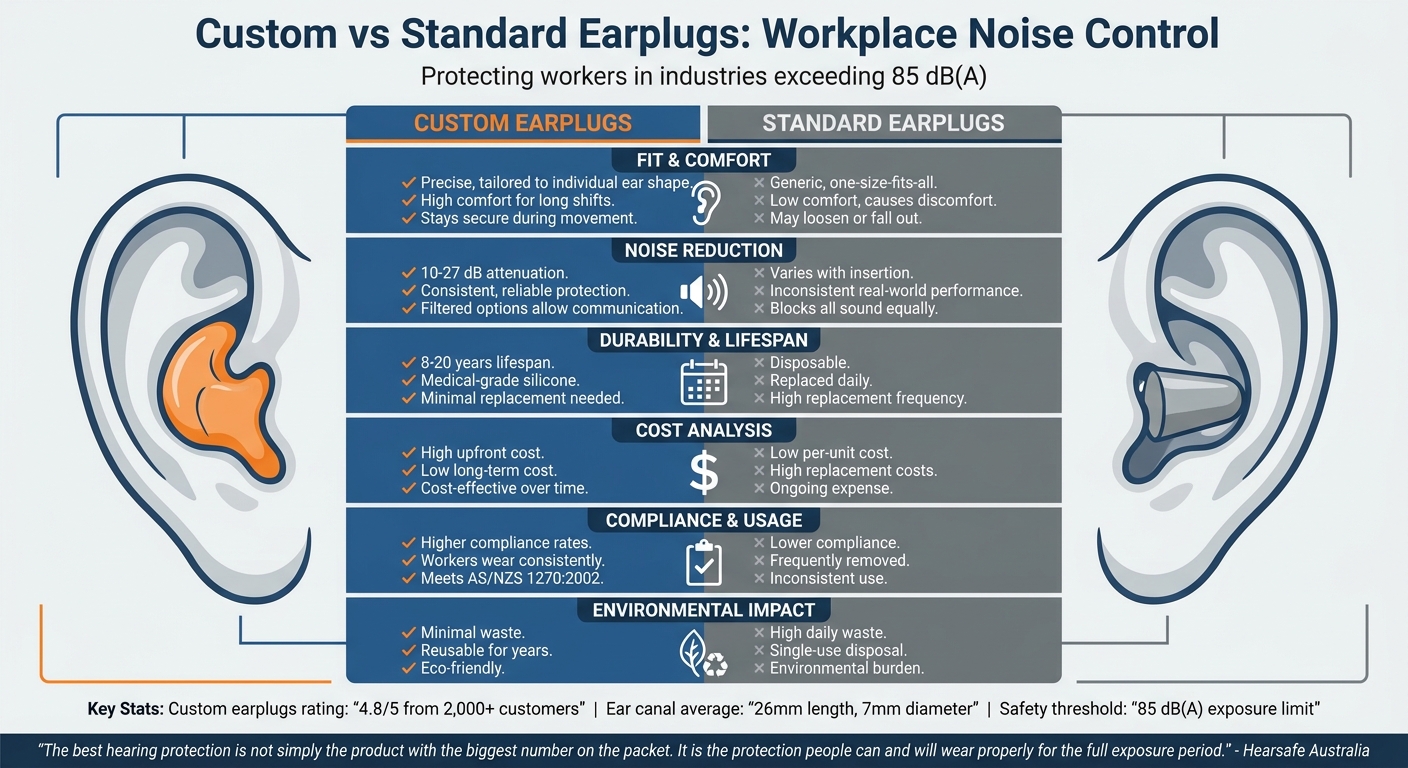
Custom vs Standard Earplugs: Complete Workplace Comparison Chart
Custom Earplugs Custom Hearing Protection VS and Generic Ear Plugs Generic Hearing Protection Why?
sbb-itb-80b2a19
Custom Earplugs: Features and Benefits
Custom earplugs are crafted using individual ear impressions to ensure a precise, tailored fit. ACS Custom takes this process to the next level with their meticulous approach, achieving a seal that standard earplugs simply can't replicate. This design creates hearing protection that stays securely in place, even during physically demanding tasks or extended workdays.
Precision Fit and Comfort
The key to custom earplugs lies in the professional impression-taking process. These impressions are used to mould earplugs from medical-grade silicone, designed to fit the unique contours of each ear. This eliminates the discomfort and irritation often caused by foam or plastic earplugs, allowing users to wear them comfortably for long periods. As one satisfied user shared:
"Most comfortable and effective ear plugs I have tried. (And I have tried many.)" - Rhianna K, SleepSound Earplugs
Their secure fit also ensures they stay in place during movement, speaking, or sweating - common scenarios where disposable foam plugs tend to shift and compromise their effectiveness.
Noise Reduction Performance
Custom earplugs, like the PRO Series, go beyond simply blocking sound. They incorporate high-fidelity filters that provide noise attenuation ranging from 10 to 27 dB. This selective filtering reduces harmful noise levels while still allowing essential sounds - like communication, machinery, and safety alarms - to come through clearly. Unlike standard plugs, which require proper rolling or insertion for effective use, custom earplugs deliver consistent protection every time they’re worn.
These earplugs are not only functional but also built to endure the demands of tough environments.
Durability and Cost Efficiency
Made from durable medical-grade silicone, custom earplugs are designed to withstand daily wear in challenging industrial settings. Many users report using their ACS Custom earplugs for over 8 to 20 years. This durability significantly reduces the need for frequent replacements, making them a cost-effective choice in the long run despite the higher initial investment.
With a 4.8/5 rating from over 2,000 customers, these earplugs combine comfort, effectiveness, and longevity. For Australian workplaces prioritising hearing protection, they offer a practical and reliable solution that supports compliance and productivity over time.
Standard Earplugs: Features and Limitations
Standard earplugs, such as foam and pre-formed types, are the go-to choice for hearing protection in many Australian workplaces. These earplugs are often stocked in site offices for quick and easy access. By creating a basic seal in the ear canal, they help reduce noise from equipment like machinery, tools, and compressors. While their low cost and ease of availability make them appealing, they come with several drawbacks that can affect their effectiveness in practice.
Ease of Use and Accessibility
One of the biggest advantages of standard earplugs is their convenience. Workers can grab a pair from dispensers without needing appointments or waiting, making them ideal for short-term tasks or visitors. This practicality is why foam earplugs are a common sight on construction sites, in manufacturing plants, and across industrial facilities throughout Australia.
Fit and Comfort Challenges
The one-size-fits-all design of standard earplugs often falls short for many users. Unlike custom-fitted options, these earplugs don’t account for individual ear canal differences, which average around 26 mm in length and 7 mm in diameter. As NIOSH highlights, "Comfort is the key to consistent use of hearing protection. No one wants to wear something that is uncomfortable – especially for a long period of time".
Many workers experience discomfort, such as soreness, itchiness, or pressure points, within just an hour of use. This discomfort often leads to users removing their earplugs, leaving them unprotected. Additionally, foam plugs require rolling before insertion, which can be problematic on dirty worksites where contaminated hands may introduce bacteria into the ear canal. These comfort and hygiene issues further undermine their noise-reduction capabilities.
Noise Reduction and Frequent Replacement
Standard earplugs also face challenges in delivering consistent noise reduction. Even when the packaging boasts high Noise Reduction Ratings (NRR), these ratings are rarely achieved in practice if the plugs aren’t inserted properly or if they shift due to movement, talking, or sweating. NIOSH research has found that hearing protection is often "inadequately chosen, worn incorrectly, [or] used inconsistently".
Improper use not only wastes time but also fails to provide reliable protection. On top of that, most workers discard their earplugs at the end of each shift, leading to ongoing replacement costs and contributing to workplace waste.
Custom vs Standard Earplugs: Direct Comparison
Looking at custom and standard earplugs side by side, the differences in comfort, effectiveness, and overall cost are striking. The tables below highlight how these two options compare across key factors.
Comfort, Fit, and Noise Reduction
| Factor | Custom Moulded Earplugs | Standard (Foam/Disposable) Earplugs |
|---|---|---|
| Fit Accuracy | Tailored to the exact shape of the wearer’s ear | Generic design meant to fit most users |
| Extended Comfort | High – avoids pressure points, even during long shifts | Low – can cause discomfort or irritation after prolonged use |
| Insertion Consistency | Always fits the same way due to its moulded design | Can vary depending on how well they’re rolled and inserted |
| Stability | Stays securely in place, even during movement or sweating | May loosen or fall out with jaw movement |
| Noise Reduction | Reliable and can be tailored for specific frequencies | Theoretical protection is high, but real-world performance often falls short |
Custom earplugs offer unmatched precision and consistency. They maintain their seal through movement and activity, unlike standard earplugs, which can shift or lose effectiveness depending on how they’re inserted.
Cost, Productivity, and Return on Investment
| Factor | Custom Moulded Earplugs | Standard (Foam/Disposable) Earplugs |
|---|---|---|
| Initial Cost | Higher upfront cost per user | Very low per-unit cost |
| Replacement Frequency | Rarely needed; designed to last for years | High; often replaced daily or multiple times per shift |
| Waste Generation | Minimal – reusable, with little environmental impact | High – creates significant daily waste |
| Compliance Rates | Higher – comfortable enough for all-day wear | Lower – discomfort leads to frequent removal |
| Productivity Impact | Boosts productivity by reducing fatigue and enabling better communication | May hinder focus due to discomfort or isolation effects |
While custom earplugs involve a larger upfront expense, they pay off in the long run. Their durability eliminates the need for frequent replacements, cutting down on costs and waste. Plus, their superior comfort encourages workers to wear them consistently, ensuring better protection and fewer interruptions during shifts.
For Australian workplaces, custom earplugs stand out as the smarter investment. They not only enhance comfort and safety but also support productivity and reduce environmental impact - making them a practical solution for industries prioritising effective noise control.
Why Custom Earplugs Work Better for Australian Workplaces
Industries like mining, manufacturing, and construction in Australia demand hearing protection that can handle tough conditions - think extreme heat, dust, and long shifts. Custom earplugs, crafted from medical-grade soft silicone, are built to endure these challenges while providing reliable protection.
What sets custom earplugs apart is their personalised fit. Using a professional ear impression process, they are moulded to match the unique shape of each worker’s ear canal. This tailored approach ensures a consistent fit that meets AS/NZS 1270:2002 standards, the go-to benchmark for acoustic hearing protectors in Australia and New Zealand. The result? Reliable compliance paired with better noise filtering.
Another standout feature of custom earplugs is their ability to balance protection with functionality. Unlike generic options that block all sound, filtered custom plugs - such as the ACS PRO Series - offer targeted noise reduction ranging from 10 dB to 27 dB. This means workers can still hear important sounds like alarms and warnings, which is crucial for maintaining safety and situational awareness in hazardous environments.
"The best hearing protection is not simply the product with the biggest number on the packet. It is the protection people can and will wear properly for the full exposure period." – Hearsafe Australia
Comfort plays a big role too. Custom earplugs are designed to eliminate the discomfort of foam plugs, like pressure points and itching, ensuring workers are more likely to wear them throughout their entire shift. This combination of comfort and effectiveness bridges the gap between theoretical safety and practical, everyday use - helping workplaces maintain both safety and productivity.
Conclusion
Deciding between custom and standard earplugs for workplace noise control isn't just about upfront costs - it’s about prioritising long-term protection, compliance, and overall practicality. While standard foam plugs may seem like a budget-friendly choice, their tendency to fit poorly and require frequent replacements often leads to workers removing them mid-shift, reducing their effectiveness.
Custom earplugs, on the other hand, are tailored to fit each individual’s ear, providing a dependable and consistent seal every time they’re used. Made from soft, medical-grade silicone, they avoid pressure points and irritation, ensuring they stay comfortable and secure even during long periods of use. As experts remind us, "Once hearing is damaged, there is no easy fix. That is why buying the cheapest option over and over is not always the cheapest outcome".
Moreover, custom earplugs can include advanced features like filtered communication. For example, the ACS PRO Series filters offer attenuation levels ranging from 10 dB to 27 dB, enabling workers to hear vital sounds - such as alarms, instructions, and machinery - while still being shielded from harmful noise. This balance between protection and awareness is especially crucial in high-risk Australian industries like mining, construction, and manufacturing.
FAQs
How do I know if my workplace noise is over 85 dB(A)?
You can measure workplace noise levels to see if they exceed 85 dB(A) using tools like a sound level meter or a dosimeter. According to Australian regulations, exposure to noise above this limit during an 8-hour work shift can damage hearing. Regularly monitoring noise levels not only ensures compliance but also plays a key role in safeguarding your hearing.
How long do custom earplugs last with daily use on site?
Custom earplugs, when cared for properly, can last between 4 to 5 years, even with daily use in demanding environments. To ensure they stay effective and durable, regular cleaning and appropriate storage are essential.
Which filter level should I choose to hear alarms and speech?
To stay protected while still being able to hear alarms and speech, it's important to choose a filter level that balances noise reduction with awareness of your surroundings. Custom-moulded earplugs with interchangeable filters are a great option, offering flexibility to adjust as needed. Filters with lower noise reduction ratings - typically around 10–15 dB - work well for this. They allow you to hear critical sounds like alarms and conversations clearly, while still shielding you from harmful noise levels.


