

I’d consider custom swim plugs for frequent swimming - but I wouldn’t expect a guaranteed watertight seal. Listed ACS options cost A$200–A$300, so I’d check the fit, swimming-cap comfort and any extra appointment fees before buying.
Here’s how I’d choose and care for them:
- Occasional swims: Mouldable silicone or pre-shaped plugs may suit. Standard foam plugs are for noise, not swimming.
- Regular pool or surf sessions: Custom plugs may offer a more secure, comfortable fit. Children need supervised fitting and fit reviews as they grow.
- Ear conditions: I’d ask a clinician about water precautions for grommets, a perforated eardrum or repeated infections.
- After each swim: Follow the cleaning instructions, dry plugs fully and check for damage or leaks.
My main rule? <u>Fit and ear health come first.</u> Swim plugs aren’t for diving or a substitute for rated hearing protection. They don’t prevent every infection - pain, discharge or dizziness needs medical advice, and sudden hearing loss needs urgent assessment.
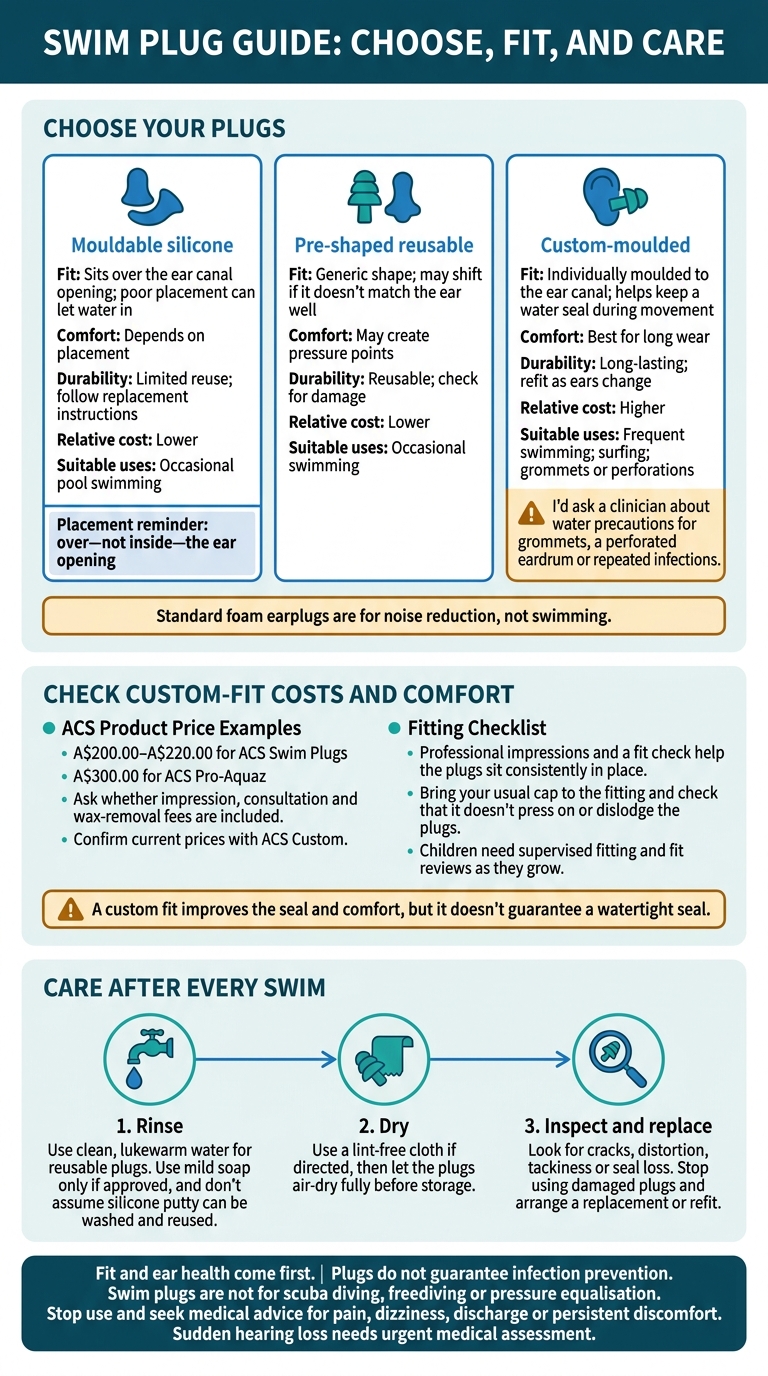
Swimming Earplugs: Choose, Fit and Care
Swim Earplug Types and Uses
Earplug performance depends on design, but fit, condition and correct insertion matter most.
| Type | Fit and water sealing | Comfort | Durability | Relative cost | Suitable uses |
|---|---|---|---|---|---|
| Mouldable silicone | Sits over the ear canal opening; poor placement can let water in | Depends on placement | Limited reuse; follow replacement instructions | Lower | Occasional pool swimming |
| Pre-shaped reusable | Generic shape; may shift if it doesn’t match the ear well | May create pressure points | Reusable; check for damage | Lower | Occasional swimming |
| Custom-moulded | Individually moulded to the ear canal; helps keep a water seal during movement | Best for long wear | Long-lasting; refit as ears change | Higher | Frequent swimming; surfing; grommets or perforations |
The main differences come down to the seal, comfort and how securely the plugs stay in place.
Mouldable Silicone, Pre-Shaped and Foam Plugs
Standard foam earplugs are for noise reduction, not swimming. They absorb water and stay damp.
Swim Plugs for Pools, Surf and Children
In surf, a secure custom fit helps plugs stay in place through moving water and longer sessions. Specialised plugs such as Pro-Aquaz use filters to reduce water entry and wind chill while allowing conversation and awareness of surrounding sounds. They reduce sound by about 10 dB. Detachable cords can help prevent loss, but they can also snag on gear.
For children, custom plugs can be made for any ear size and can help those with grommets. Supervise fitting and removal, as small parts can pose a choking risk. Children may also need refits as their ears grow.
Seek clinical advice for recurrent swimmer’s ear or high water sensitivity. Plugs do not guarantee infection prevention. If fit is your main concern, the next step is an ear impression and fit check.
Swim plugs are not for scuba diving, freediving or pressure equalisation.
sbb-itb-80b2a19
Custom Swim Plugs: How They Work
Custom swim plugs are moulded from impressions of your ear canal and outer ear, usually in a full-shell shape. For that shape to fit properly, you need a careful impression and a fit check.
Ear Impressions and Fit Checks
A trained clinician checks your ears for wax or blockage before taking impressions of the ear canal and outer ear. The finished plugs should feel snug, without pain or leakage. If either persists, ask for a fit review.
Custom Fit: Benefits and Trade-Offs
A custom fit improves the seal and comfort, but it doesn’t guarantee a watertight seal. Before buying, check the costs, care requirements and fit with your swimming cap.
| Practical consideration | What to check |
|---|---|
| Fit consistency | Professional impressions and a fit check help the plugs sit consistently in place. |
| Retention | Ask for a fit review if your plugs become loose. |
| Refit timing | ACS recommends updating impressions every 4 years; ear growth or changes in shape may mean you need a refit sooner. |
| Reuse cost | Budget for upfront costs and impression fees, plus regular cleaning and drying. |
| Swimming-cap compatibility | Bring your usual cap to the fitting and check that it doesn’t press on or dislodge the plugs. |
With the fit checked, you can turn to what to buy, how to insert your plugs and how to care for them.
Buying and Caring for Swim Plugs
What to Check Before Buying
Tell your audiologist where you’ll use the plugs: in pools, in the surf or during other water sports. If you have grommets, a perforated eardrum, recent ear surgery or exostosis, ask a GP, audiologist or ENT specialist about suitable water precautions. Check the custom earplugs vs. foam left/right markings and whether a detachable cord is available. Red commonly marks the right ear; blue marks the left.
Listed prices are A$200.00–A$220.00 for ACS Swim Plugs and A$300.00 for ACS Pro-Aquaz. Ask whether impression, consultation and wax-removal fees are included. Pro-Aquaz comes with a detachable cord, carry case, comfort cream and care instructions. Confirm current prices with ACS Custom, and book wax removal before your impression appointment if needed.
How to Insert and Remove Swim Plugs
Practise inserting and removing your plugs before your first swim. Start with clean, dry hands and follow the product instructions. For canal-fitting plugs, gently lift the outer ear where directed. Place mouldable silicone over - not inside - the ear opening. Check that the plugs sit securely before entering the water, and gently break the seal before removing them.
If your plugs leak or come loose, book a refit. Stop use and seek medical advice for pain, dizziness, discharge or persistent discomfort.
How to Clean, Dry and Replace Swim Plugs
After each swim, clean and dry your plugs before putting them away:
- Rinse: Use clean, lukewarm water for reusable plugs. Use mild soap only if approved, and don’t assume silicone putty can be washed and reused.
- Dry: Use a lint-free cloth if directed, then let the plugs air-dry fully before storage.
- Inspect and replace: Look for cracks, distortion, tackiness or seal loss. Stop using damaged plugs and arrange a replacement or refit. Growing children may need more frequent fit reviews; new impressions are generally recommended every 3 to 4 years.
Never share plugs or insert cotton buds or other objects into the ear canal.
Conclusion: Choose for Fit, Use and Ear Health
Choose swim plugs based on how often you swim, the seal you need and how your ears react to water. Standard silicone plugs may suit occasional swimmers with no ear conditions. Custom plugs may suit frequent swimmers looking for a better seal and greater comfort. Correct fit and regular care still affect how well they work.
Fit and comfort matter, but ear symptoms need medical review. Plugs do not prevent all infections or treat ear conditions. Seek professional assessment for pain, itching, swelling, discharge, reduced hearing, persistent blockage, dizziness or balance problems. Sudden hearing loss needs urgent medical assessment.
FAQs
How can I check my swim plugs’ seal before swimming?
Check that your ear canal is clear of blockages, especially earwax. Custom plugs need deep, unobstructed impressions to form a proper seal.
Insert the plugs, then hum or speak. They should feel snug and comfortable, with no pain or pressure. If the fit doesn’t feel right, don’t swim - have the plugs adjusted under ACS Custom’s fit warranty.
When are custom swim plugs worth the cost?
Custom swim plugs are worth considering if you often take part in water sports, work in water or have recurring ear problems. Their reliable, watertight seal can be especially helpful if you have grommets, a perforated eardrum or a history of swimmer’s ear.
They also protect against cold water and wind, both of which contribute to surfer’s ear. Built to last, they can be a cost-effective option for protecting your hearing health over time.
What should I do if water gets past my plugs?
If water gets past your swim plugs, stop swimming and dry your ears thoroughly to reduce the risk of swimmer’s ear. Check the fit and seal again - a poor fit is a common cause of leaks.
If you have grommets or a perforated eardrum, follow your specialist’s advice before swimming again. ACS Custom swim plugs depend on a watertight custom seal, so repeated leaks may mean the fit needs to be checked.


