

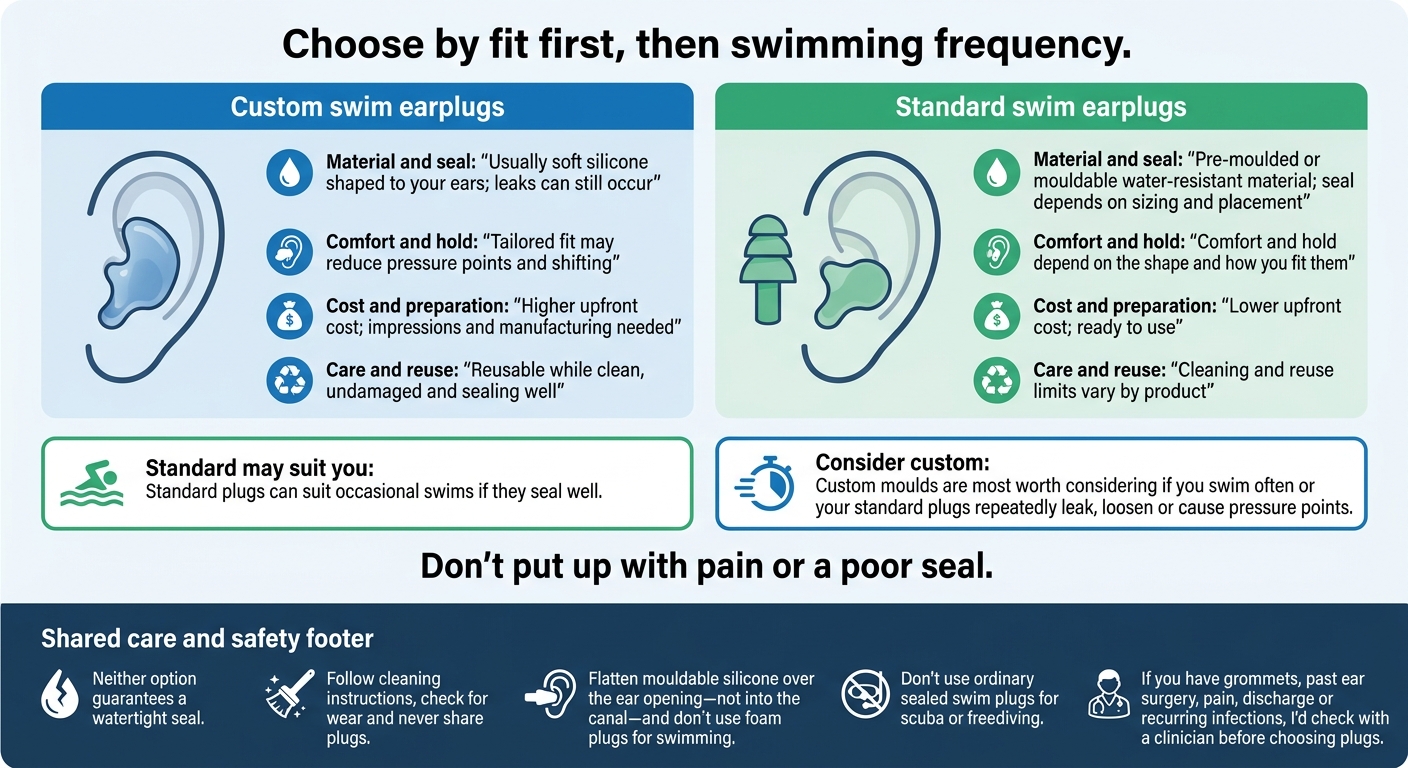
I’d choose swim earplugs by fit first, then swimming frequency - not material alone. Standard plugs can suit occasional swims if they seal well. Custom plugs cost more and need ear impressions, but are worth considering if you swim often or standard plugs keep leaking, loosening or hurting.
Quick Comparison
| What matters | Custom swim earplugs | Standard swim earplugs |
|---|---|---|
| Material and seal | Usually soft silicone shaped to your ears; leaks can still occur | Pre-moulded or mouldable water-resistant material; seal depends on sizing and placement |
| Comfort and hold | Tailored fit may reduce pressure points and shifting | Comfort and hold depend on the shape and how you fit them |
| Cost and preparation | Higher upfront cost; impressions and manufacturing needed | Lower upfront cost; ready to use |
| Care and reuse | Reusable while clean, undamaged and sealing well | Cleaning and reuse limits vary by product |
My rule: <u>don’t put up with pain or a poor seal</u>. Follow cleaning instructions, check for wear and never share plugs. Flatten mouldable silicone over the ear opening - not into the canal - and don’t use foam plugs for swimming.
Neither option guarantees a watertight seal. Don’t use ordinary sealed swim plugs for scuba or freediving. If you have grommets, past ear surgery, pain, discharge or recurring infections, I’d check with a clinician before choosing plugs.
Custom vs Standard Swim Earplugs: Fit First
Materials and Water Seals
Water-resistant material does not guarantee a watertight seal. Both custom and standard swim earplugs can let moisture in if the fit is poor.
The differences lie in how each plug seals, stays in place and responds to movement.
| Comparison factor | Custom swim earplugs | Standard swim earplugs |
|---|---|---|
| Materials | Soft medical-grade silicone | Silicone or similar water-resistant materials |
| Seal | Moulded to the ear canal entrance and concha | Fixed shapes, or mouldable silicone flattened over the ear opening |
| Leak risk | Designed for a snug seal, but leaks can still occur | Depends on size, shape and placement |
| Stays put during swimming | Soft silicone helps maintain the seal during movement | May shift if the fit or placement is not right |
| Comfort | Tailored to individual ear anatomy | Varies by size, shape and placement |
| Ear impressions required | Yes, professionally taken | No |
Custom Plugs: Silicone Moulded to Your Ear
Custom plugs use a seal shaped to your ear rather than a one-size fit. Professionally taken impressions shape the plug to the ear canal entrance and concha, part of the outer ear. Have your ears checked for wax before the impressions are taken.
Even medical-grade silicone cannot guarantee a leak-free seal. Head movement can change the seal, though soft silicone helps the plug stay in place.
Standard Plugs: Pre-Moulded or Mouldable
Standard plugs rely more on correct placement and choosing the right size or shape. Pre-moulded swim plugs use ready-made silicone or similar water-resistant materials. Mouldable silicone should be flattened over the ear opening, not pushed into the canal. Follow the product instructions exactly.
Foam earplugs are not swim plugs. They block noise rather than water and can trap moisture.
sbb-itb-80b2a19
Fit, Comfort and Staying in Place
A good seal needs to hold as you move.
Comfort comes down to fit. Correctly fitted custom moulds can sit more consistently, though some swimmers notice their bulk. Standard plugs can also feel comfortable when the size, shape and placement suit the ear.
| Factor | Custom swim earplugs | Standard swim earplugs |
|---|---|---|
| Fit consistency | Follow individual ear contours for repeatable positioning | Rely on suitable sizing or shaping and correct placement |
| Reseating | Usually need less adjustment when correctly fitted | May need reseating if they shift or loosen |
| Pressure points | Soft silicone spreads contact, but a poor fit can still hurt | A mismatched pre-moulded shape can press against the ear |
| Staying put during splashing and head turns | Full-concha designs help resist displacement | Rely more on the chosen shape and placement; may become dislodged |
How Ear Shape and Movement Affect the Seal
Turning your head changes the shape of your ear canal, which can break the seal. Flexible custom silicone can allow for some movement, but incorrect placement or hair caught underneath can still let water in.
Check the colour-coded left/right markings before inserting your plugs. If custom plugs leak or hurt, have the fit checked. Recheck every 4 years, or sooner if the seal changes.
A seal that holds at the surface can still fail under pressure.
Why Swim Plugs Are Not Diving Plugs
Do not use ordinary sealed swim plugs for scuba or freediving. Both custom and standard sealed plugs can trap air in the ear canal. As pressure increases during descent, this trapped air can lead to a pressure-related injury called barotrauma.
Seek advice from a clinician with diving-medicine expertise before diving with ear protection.
Cleaning, Storage and Reuse
Custom silicone plugs can be reused while they hold their shape and seal. Standard plugs differ by product, so follow the packaging.
Silicone’s water barrier depends on its shape and surface. Proper care helps maintain the seal, not just keep the plugs clean.
| Care requirement | Custom silicone plugs | Standard plugs |
|---|---|---|
| Cleaning | Use mild soap and warm water only if the instructions allow it; rinse well | Follow the packaging; some mouldable products should not be washed |
| Drying | Air-dry completely before storage | Follow product instructions; dry reusable plugs completely |
| Storage | Use a clean, dedicated carry case | Use the original packaging or a clean case, as instructed |
| Reuse limits | Designed for repeated use; continued use depends on condition and fit | Follow the stated limit |
| Replacement triggers | Material wear, dirt that cannot be removed or an unreliable seal | Material wear, dirt that cannot be removed, poor sealing or reaching the reuse limit |
Follow the Cleaning Instructions
Check the instructions before washing any plugs, including custom medical-grade silicone. Only wash mouldable standard plugs if their instructions allow it.
Keep your hands and the storage case clean. Let plugs dry fully before storing them, and never share earplugs.
Check for Damage and Changes in Fit
Before each use, check for cracks, changes in shape, embedded dirt, hardening or stickiness. Replace plugs if they no longer seal securely or cannot be cleaned as instructed.
Children may outgrow custom moulds even when the silicone still looks sound. Check the fit as they grow, as changes to their ears may call for new impressions.
For standard plugs, follow the stated reuse limit. A worn plug can lose its seal even if it still looks usable.
Conclusion: Choose by Swimming Frequency and Fit
The main difference between custom and standard swim earplugs isn’t the material - it’s how reliably they seal. Use fit and swimming frequency to guide your choice.
| Decision factor | Custom swim earplugs | Standard swim earplugs |
|---|---|---|
| Occasional swimming | May be unnecessary unless standard shapes don’t fit. | Suitable if they provide a reliable seal. |
| Frequent training | Offer repeatable fit, comfort and durability when correctly fitted. | Suitable if they stay comfortable and secure within their reuse limits. |
| If plugs keep loosening | Worth considering if standard plugs repeatedly loosen. | Standard shapes may not fit your ears securely. |
| Sensitive ears | Soft, medical-grade silicone may reduce pressure points. | Choose a softer fit, but don’t put up with pain. |
| Time to use | Require impressions and manufacturing time. | Ready to use immediately. |
Who Gains Most From Custom Moulds
Custom moulds are most worth considering if you swim often or your standard plugs repeatedly leak, loosen or cause pressure points.
When to Seek Medical Advice
Get medical advice before buying if you have an ear condition or a history of ear surgery. Speak with a GP or ear, nose and throat specialist if you have grommets, previous ear surgery, active discharge, pain or recurring infections.
Custom plugs may help control leaks, but they aren’t a treatment. Grommets don’t automatically mean you need earplugs; ask your clinician what suits your circumstances.
FAQs
How can I check my swim earplugs seal properly?
Before checking the seal of your custom swim earplugs, make sure your ear canals are clear of earwax or other blockages. Clear canals also help your provider take accurate impressions.
Insert the plugs, then hum or speak. The fit should feel snug and comfortable, with no pain or pressure.
If the fit feels wrong, stay out of the water and contact your provider for a fit review. If water leaks in while you’re swimming, stop, dry your ears thoroughly and book a refit.
What should I do if water gets past my earplugs?
Stop swimming straight away and dry your ears thoroughly to reduce the risk of swimmer’s ear. Check the fit and seal of your earplugs, as a poor fit often causes leaks.
If you have grommets or a perforated eardrum, follow your specialist’s advice before swimming again. ACS Custom swim plugs rely on a watertight, custom seal. If they keep leaking, book a professional fit review.
When do custom swim plugs become better value?
Custom swim plugs can offer better value if you often take part in water sports, work in water or have recurring ear conditions. Their reliable seal helps keep water out and reduces the risk of water-related infections, especially if you have grommets, a perforated eardrum or a history of swimmer’s ear.
They also help protect against surfer’s ear caused by cold water and wind. Made for long-term use, they typically last three to four years.


