

I check custom earplugs for wear before each use - not just their age. If a problem remains after approved cleaning and correct insertion, stop using them in hazardous noise and arrange a check.
These are the 5 signs I look for:
- Damaged material: hardening, cracks or changes in shape.
- Poor fit: slipping, pressure or pain.
- Sound changes: familiar sounds seem louder.
- Persistent dirt: wax, residue or odour remains after cleaning.
- Faulty parts: a plug, filter, stem or other part is missing or damaged.
My rule: clean what can be cleaned, have fit problems checked, and replace damaged plugs or approved parts. <u>Looking intact does not prove protection</u>; fit testing can check how much sound your plugs block.
ACS Custom recommends new ear impressions every 4 years, but that is not a guaranteed replacement interval. Until questionable plugs are checked, use suitable backup hearing protection like foam earplugs or avoid hazardous noise. If pain, itching or discharge persists, seek medical advice.
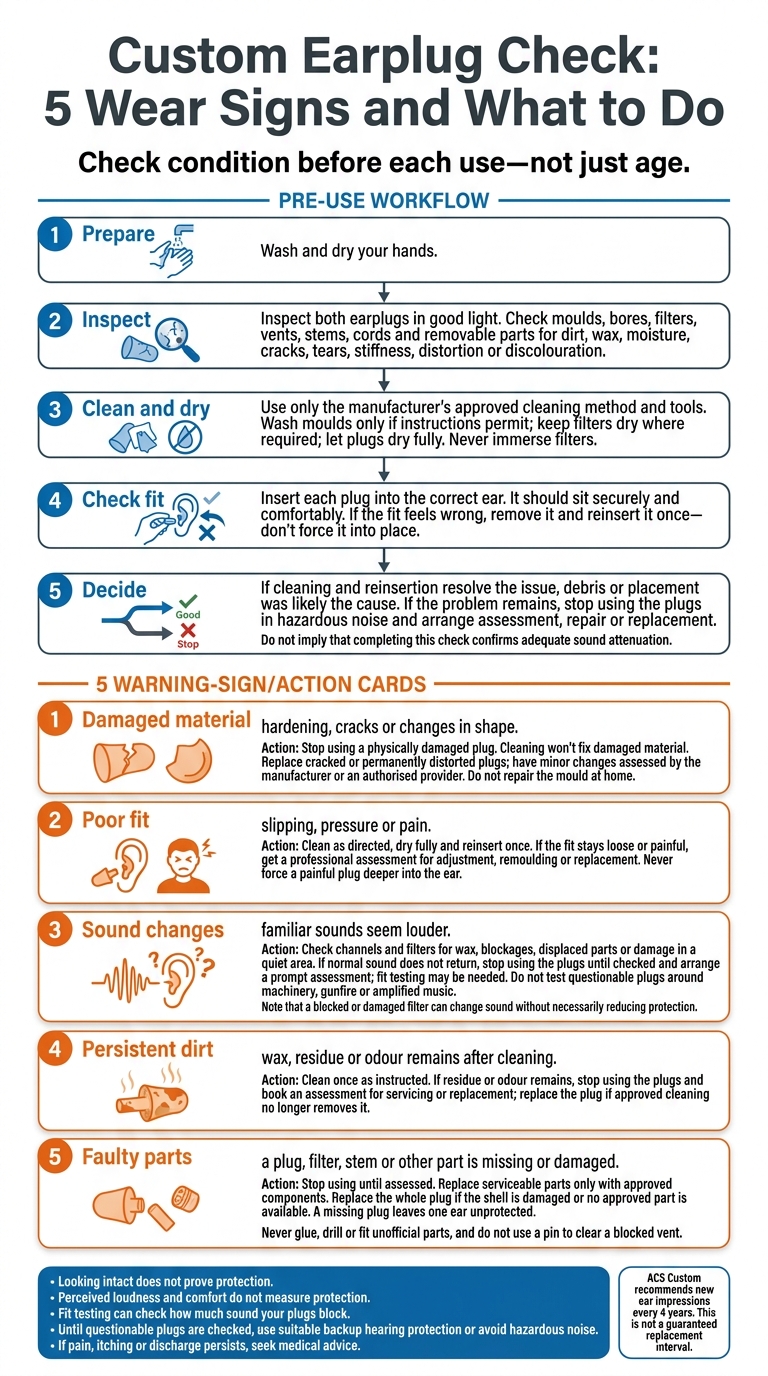
Custom Earplug Check: 5 Wear Signs and What to Do
Check Your Earplugs Before Use
Wash and dry your hands, then inspect both earplugs in good light. Check the moulds, bores, filters, vents, stems, cords and removable parts for dirt, wax, moisture, cracks, tears, stiffness, distortion or discolouration.
Clean before judging wear. Remove visible wax or dirt using only the manufacturer’s approved cleaning method and tools. Only wash moulds if the instructions allow it, keep filters dry where required, and let the plugs dry fully before checking them again.
Follow the care instructions for your model, particularly if it has removable filters or vents.
Insert each plug into the correct ear. It should sit securely and comfortably. If the fit feels wrong, remove it and reinsert it once - don’t force it into place. A visual check cannot confirm the level of protection. Formal fit testing can help establish whether the protection is adequate.
If cleaning and reinsertion resolve the issue, debris or placement was the cause. If the problem remains, stop using the plugs in hazardous noise and arrange assessment, repair or replacement. Store serviceable plugs clean and dry in their case. If the plugs still fail this check, move to the five wear signs below.
sbb-itb-80b2a19
1. The Material Is Hard, Cracked or Misshapen
Warning Signs
Check for cracks, tears, holes, flaking, rough edges or discolouration. If the plug feels harder, has shrunk or is less flexible than usual, the material may be deteriorating.
Effects on Protection
Cracks, hardening or warping can break the seal, allowing sound or water to leak through.
Clean off any debris before checking for cracks, hardening or changes in shape. Cleaning won’t fix damaged material.
Repair or Replacement
Stop using a physically damaged plug and arrange repair or replacement. Don’t try to repair the mould at home. Replace it if it’s cracked or permanently distorted; damaged removable filters or parts can be replaced separately.
2. The Fit Is Loose or Painful
Warning Signs
If a plug that once stayed secure now moves, pinches or hurts, it may be worn or no longer fit your ear. Watch for slipping when you talk, frequent adjustments, new pressure points or trouble inserting or removing it. A good fit should not hurt. Never force a painful plug deeper into your ear.
Effects on Protection
A loose seal lets sound pass around the plug and reach your ear. Pain may also prompt you to loosen or remove it, reducing protection. Do not rely on a loose or painful plug in hazardous noise.
Cleaning and Inspection
Check for wax, dirt or moisture. Clean the plug as directed, let it dry, then reinsert it once. If it feels secure and comfortable again, debris or placement was likely the problem. Seek medical advice if pain, swelling or discharge persists.
Repair or Replacement
Slipping or pinching that continues can point to changes in your ear canal, a poor original fit or an outdated impression. Contact your provider, such as ACS Custom, to discuss adjustment, remoulding or replacement. Arrange a professional fit assessment with an audiologist or audiometrist; fit testing can confirm how much protection you’re getting.
If the fit still feels wrong after cleaning and reinsertion, check whether sound is getting through next.
3. Familiar Sounds Seem Louder
Warning Signs
Even if the fit feels normal, listen for changes in sound passing through the plug. Voices or everyday sounds that seem louder or sharper may point to a failing seal or filter. Pay attention to a sudden change in one ear, especially after cleaning or dropping the plug. Do not test questionable plugs around machinery, gunfire or amplified music.
Effects on Protection
Louder sound may mean the seal or filter is no longer doing its job. A poor seal lets sound bypass the plug. A blocked or damaged filter, however, can change the sound without necessarily reducing protection. Perceived loudness and comfort do not measure protection.
Cleaning and Inspection
In a quiet area with good light, check the sound channels and filters for wax, blockages, parts out of place or visible damage. If normal sound does not return, stop using the plugs until they have been checked.
Repair or Replacement
Ask ACS Custom to check the mould and filter. Replace any damaged filter or other serviceable part. If the sound change persists, arrange a fit assessment or remake. For shooting or music, have the change assessed before the next use.
4. Wax, Dirt or Odour Persists After Cleaning
Warning Signs
If cleaning no longer removes odour, sticky residue or wax, your earplugs are showing signs of wear. A light mark is only a minor issue if the surface remains smooth, intact and odour-free.
Effects on Protection
Persistent contamination can make a plug unfit for use. Don’t rely on a plug for hearing protection if you can’t keep it clean.
Cleaning and Inspection
Use only the cleaning method approved for your model, then check for remaining residue. Keep filters dry unless the instructions say otherwise. If odour or residue remains, it’s no longer just surface dirt.
Repair or Replacement
Stop using the plugs if odour or residue remains, and book an assessment for component servicing or replacement. Replace the plug if cleaning no longer removes the residue or odour.
5. A Plug or Part Is Missing or Damaged
Warning Signs
If cleaning and refitting don’t fix the problem, check for missing or damaged parts. Missing or loose parts point to wear, not a cleaning issue, and can make protection unreliable.
Look for loose or missing filters, blocked vents or sound bores, cracked stems, detached cords, and loose retaining clips or tabs. If a plug won’t stay assembled, stop using it and have it assessed.
Effects on Protection
A missing plug leaves one ear unprotected. Missing or damaged filters can change how much sound a plug blocks. Damage to a swim plug’s sealing component can let water in, while broken cords or stems can make insertion and removal unreliable.
Cleaning and Inspection
Check that openings are clear and removable parts are fitted correctly, following the instructions. Don’t force a filter into place or use a pin to clear a blocked vent. This can damage the opening and change how it works.
Repair or Replacement
Stop using a plug with a missing or damaged part until it’s assessed. Contact ACS Custom with the model, side and damaged part to ask about approved replacement options.
An intact shell may allow component servicing. A cracked shell or loose housing usually needs replacement. Never glue, drill or fit unofficial parts: these can change how much sound the plug blocks, its seal and its fit.
When to Clean, Get an Assessment or Replace
If you spot wear, use this table to decide whether your earplugs need cleaning, assessment or replacement.
| Observable condition | Recommended action |
|---|---|
| Material is hard, cracked or misshapen | Replace if the damage affects the seal. Have minor changes assessed by the manufacturer or an authorised provider. |
| Fit stays loose or painful | Get a professional assessment for adjustment, remoulding or replacement. |
| Familiar sounds seem louder | Arrange a prompt assessment. Fit testing may be needed. |
| Wax, dirt or odour remains | Clean once as instructed. Replace if residue or odour remains. |
| A filter, cord, stem, vent or other part is missing or damaged | Replace the part with an approved component. Replace the whole plug if the shell is damaged or no approved part is available. |
After cleaning or replacing parts, follow the care instructions for your exact model. Wipe plugs after use and store them clean and dry. Before washing non-electronic earpieces, check that washing is permitted and remove the filters. Let the earpieces dry fully before reassembly. Never immerse filters.
If pain, discharge or itching continues, stop wearing the plugs and seek medical advice.
Fit testing checks how much protection the plugs provide while you’re wearing them, rather than relying only on their protection rating. Until that protection is confirmed, use suitable backup hearing protection or stay out of hazardous noise.
Conclusion: Check Condition, Not Just Age
Use the five signs above to decide when to replace your custom earplugs. Judge their condition, not just their age.
Ear canals change over time, even if your plugs still look intact. ACS Custom recommends updating ear impressions every 4 years to account for these changes. That interval doesn’t guarantee the plugs remain effective.
Ask an audiologist, hearing-protection provider or ACS Custom whether your plugs need cleaning, refitting or replacement. If you notice any of the five signs, stop using the plugs in hazardous noise until they’ve been checked.
FAQs
What happens during an earplug fit test?
At home, put in your custom earplugs, then hum or speak to check for a snug seal. If the fit seems to have changed, a professional assessment may use Real-Ear Measurement (REM) to check the stated protection and Personal Attenuation Rating (PAR) to measure noise reduction for your specific fit.
If needed, your provider may adjust the insertion depth or angle, or take new ear impressions to restore comfort and effectiveness.
Can changes in my ears affect my earplug fit?
Your ear canals naturally change shape as you age. This can affect how well your custom earplugs fit and seal. If they feel loose, need frequent adjustment or cause new pressure points, your ear shape may have changed.
ACS Custom recommends updating your ear impressions every four years to keep a proper, effective seal for hearing protection.
How can I help my custom earplugs last longer?
Help your custom earplugs last 3–5 years by wiping away sweat and wax with a soft, lint-free cloth after each use. Then gently wash them with mild soap and warm water.
Let them air dry fully before storing them in a clean, dry, hard-shell case. Keep them away from extreme heat, which can warp silicone.
Ear canals change shape over time, so ACS Custom recommends updating your ear impressions every 4 years to maintain a secure, effective seal.


