

Investing in custom earplugs vs. foam earplugs is a smart choice for protecting your hearing. But how long do they last? With proper care, most custom earplugs last 3 to 5 years, though heavy daily use or harsh conditions may shorten their lifespan to 2–3 years. Factors like material quality, usage habits, and maintenance play a big role. Even if they seem fine, changes in your ear canal shape over time could mean it’s time for a replacement. Experts recommend updating your ear impressions every 4 years to maintain a proper fit and effectiveness.
Key Points:
- Lifespan: Typically 3–5 years, shorter with heavy use.
- Main Factors: Quality, fit, exposure to elements, and maintenance.
- Replacement Timing: When fit deteriorates, noise protection reduces, or physical wear is visible.
- Care Tips: Clean with mild soap, store in a dry case, and avoid heat or moisture.
Proper care and timely replacement ensure your earplugs stay effective and comfortable.
Using and Caring for Your Custom Ear Plugs
sbb-itb-80b2a19
How Long Custom Earplugs Last
With proper care, custom earplugs can last between 3 and 5 years. This durability comes from the use of medical-grade silicone, which is both resilient and long-lasting. However, the natural changes in the shape of your ear canal over time often determine when replacement is needed, rather than the material wearing out.
Custom earplugs are typically made from 40 Shore Medical Grade Silicone, a material designed to handle regular cleaning, daily use, and exposure to different environments. While the silicone itself holds up well, the earplugs may eventually lose their snug fit as your ear canal changes shape. This makes the fit, rather than the material, the main reason for replacing them.
Products like those from ACS Custom come with a 12-month warranty, and while some users report that their earplugs last as long as 8 to 20 years, replacing them every 3–5 years ensures they continue to provide the best fit and protection.
How Usage Patterns Affect Lifespan
The way you use your custom earplugs plays a big role in how long they last. While the silicone is durable, daily wear in challenging environments can shorten their lifespan. For example, people working in construction or professional music venues often expose their earplugs to heavy handling, sweat, dirt, and frequent cleaning. In these cases, the functional lifespan typically drops to around 2–3 years.
Certain activities can also accelerate wear and tear. Motorcyclists, for instance, subject their earplugs to wind pressure and friction from helmets, while swimmers expose theirs to pool chemicals and water. For active professionals and athletes, the lifespan is often closer to the 2–3 year range.
In contrast, occasional users - those who use earplugs for sleep, the odd concert, or travel - can usually expect them to last the full 3–5 years. With less frequent use and minimal exposure to harsh conditions, the main limiting factor becomes the gradual changes in ear canal shape rather than material damage. Storing earplugs properly when not in use can also help extend their lifespan, making occasional use much gentler on the earplugs overall.
What Affects Custom Earplug Durability
Several factors influence how long your custom earplugs retain their effectiveness. Knowing these factors can help you maximise their lifespan while ensuring they continue to provide reliable hearing protection.
Material Quality and Design
The durability of custom earplugs starts with the material used. High-quality 40 Shore Medical Grade Silicone is chosen for its strength, comfort, and hypoallergenic properties. This silicone is designed to maintain its shape even with frequent use. To further improve durability, a specialised lacquer finish is applied over the silicone. As ACS Custom explains:
Our earplugs are finished with a layer of lacquer to enhance durability and overall performance. The combination of medical-grade silicone and the lacquer finish ensures that our earplugs are comfortable, effective, and safe to wear for extended periods.
Precision moulding also plays a key role in ensuring a snug fit, which contributes to effective noise reduction. This attention to material and design detail is reflected in customer feedback, with ACS Custom products achieving a 4.8/5 rating from over 2,000 reviews. However, the way you handle and care for your earplugs significantly affects their longevity.
Usage and Maintenance Impact
Even with top-notch materials, proper care is essential for maintaining durability. Medical-grade silicone can be damaged by harsh chemicals, so it’s best to clean your earplugs with mild soap and warm water. Avoid pulling or stretching them excessively during insertion or removal, as this can weaken the silicone and lead to tears.
Hygiene is another critical factor. Handling earplugs with dirty hands can transfer debris, which may build up and affect the acoustic filters or damage the lacquer coating. Additionally, storing earplugs before they’re completely dry can promote material degradation over time.
Environmental and Storage Conditions
External conditions also have a major impact on the durability of your earplugs. Temperature and moisture are particularly influential. High temperatures or humid environments can lead to warping or deformation. For example, leaving your earplugs in a hot car can cause permanent damage. As Earmold Sydney advises:
Avoid leaving earplugs in hot or humid areas, which could cause warping or deformation.
Similarly, frequent exposure to water or high humidity - such as during swimming - can shorten their lifespan. To protect your earplugs, always store them in a clean, dry case, away from extreme temperatures. This simple habit not only shields them from environmental damage but also helps preserve both the silicone and the lacquer finish.
When to Replace Your Custom Earplugs
Custom earplugs generally last between 3 to 5 years. While proper care can extend their life, natural wear and tear will eventually mean they need replacing. Knowing the signs of deterioration ensures your ears stay protected and healthy. Here’s what to look out for.
Fit and Comfort Problems
Over time, your ear canals can change shape, which may affect how well your custom earplugs fit. If they feel loose, require constant adjustment, or create new pressure points, it’s a sign the seal isn’t working as it should. This is why experts recommend updating ear impressions every 4 years. A poor fit not only makes them uncomfortable but also reduces their ability to block noise or water effectively. Even if they look fine, changes in fit should prompt a professional assessment and possibly new impressions. Replacing them when needed keeps your hearing protection at its best.
Reduced Noise Protection
If you start noticing more ambient noise while wearing your earplugs, it’s a clear sign their performance is slipping. This often happens gradually, so it’s easy to miss. For swimmers, water leakage is an immediate warning that replacement is necessary. In noisy environments, hearing more background sound suggests the material or seal has deteriorated. Ignoring these signs could put your hearing at risk.
Physical Wear and Damage
Visible damage is one of the easiest ways to tell it’s time for new earplugs. Check regularly for cracks, tears, or splits in the silicone, as these weaken their ability to block noise and water. Loss of elasticity, brittleness, or failure to retain their shape are also signs of wear. Discolouration, heat damage, or peeling lacquer finishes are further clues that your earplugs are past their prime. Inspect them at least once a year to catch these issues early. Replacing them promptly ensures your hearing stays protected.
Daily Care and Cleaning Methods
Keeping your custom earplugs clean is key to maintaining their performance and extending their lifespan, which typically ranges from 3 to 5 years. A few simple daily habits can make all the difference.
How to Clean Your Earplugs
After each use, give your earplugs a quick wipe-down with a soft, lint-free cloth to clear away sweat and wax. For a more thorough clean, wash them gently with mild soap and warm water. Be sure to steer clear of harsh chemicals, as they can damage the silicone material. Once cleaned, let your earplugs air dry completely before putting them away.
For in-ear monitors or other advanced models, specialised tools like the ACS Revivo2 can offer extra care. This tool combines a high-speed fan and UV sterilisation to eliminate internal moisture and kill bacteria. Its default 8-hour drying cycle also helps prevent condensation issues. As ACS Custom explains:
Sweat, condensation, wax, and bacteria are the unseen enemies of your IEMs - not only can they affect sound quality, they can lead to equipment failure or even cause irritation and infection in your ears.
These cleaning methods not only keep your earplugs hygienic but also ensure they perform at their best over time.
Preventing Wax and Dirt Buildup
Consistent cleaning plays a crucial role in avoiding the accumulation of wax and dirt, which can compromise performance. To minimise wax sticking to the earplugs, consider applying a small amount of comfort cream to the in-ear section before use. This also enhances the seal for better effectiveness.
When travelling, colour-indicating silica gel packets are a handy tool - they shift from orange to green as they absorb moisture, helping to keep your earplugs dry. Make it a habit to inspect your earplugs annually for cracks, discolouration, or loss of elasticity. These signs can mean dirt is getting trapped or the earplugs are losing their protective qualities. If you're using a drying station, don't forget to replace the desiccant regularly to keep it working efficiently.
Storage Methods to Extend Lifespan
Taking care of your custom earplugs can help them last their full 3–5 year lifespan. Proper storage protects them from damage and wear caused by physical and environmental factors.
Using Protective Cases
A hard-shell case is your earplugs' best defence against impacts and debris. It not only prevents physical damage but also keeps the custom-moulded surfaces clean and free from contaminants.
Before storing, make sure your earplugs are completely dry. Moisture left on them can degrade the material over time and lead to hygiene concerns. If you often need to remove your earplugs while working, a detachable neck cord can be a handy addition. It keeps them within reach and reduces the chance of accidental drops.
Beyond using a case, the surrounding environment plays a key role in preserving your earplugs.
Avoiding Heat and Humidity
Heat and moisture are the enemies of silicone earplugs. As Earmold Sydney puts it:
Keep them in a clean, dry case. Avoid leaving earplugs in hot or humid areas, which could cause warping or deformation.
Avoid storing your earplugs in places like a car’s glovebox on a hot day, a bathroom vanity, or near heating vents. These environments can cause the material to warp, lose elasticity, or even crack.
Instead, keep your earplugs in a cool, dry, and stable spot. Regularly check for signs of wear, such as cracks, discolouration, or texture changes - these can indicate the material is nearing the end of its lifespan. Lastly, always handle your earplugs with clean hands before storing them to prevent oils or dirt from damaging the protective lacquer finish.
ACS Custom Replacement Guidelines
Why Regular Replacement Matters
Keeping your earplugs updated is just as important as cleaning and storing them properly. Regular replacement ensures your hearing protection remains effective over time.
The shape of your ear canals naturally changes as you age. ACS Custom advises updating your ear impressions every four years to accommodate these changes. This recommendation helps maintain the proper seal and ensures your earplugs continue to provide the level of protection they’re designed for.
"We recommend updating your ear impressions every 4 years. This recommendation is based on the natural changes that can occur in the shape of your ear canals over time."
If the seal of your earplugs deteriorates, new impressions will restore their fit and effectiveness. Regular updates are essential for keeping your hearing protection at its best.
These replacement guidelines also help you find the right ACS Custom product to suit your needs.
ACS Custom Product Range
Selecting the right product from ACS Custom is another step in safeguarding your hearing for the long term.
All ACS Custom earplugs are crafted from medical-grade silicone and finished with a protective lacquer. Here’s a quick look at their range:
- SleepSound earplugs: Designed for side-sleepers and shift workers, these reduce ambient noise by about 25–27 dB.
- Swim Plugs: Custom-fit for water protection, these are metal-free, making them safe for MRI scans.
- Pro Series: Ideal for loud environments, these come with filters that reduce noise by 10 to 31 dB. Models like the Pro27 and Pro31 are perfect for motorsports and industrial settings.
Each product is backed by a 12-month warranty covering defects in build and components. There’s also a 60-day fit warranty and a 60-day filter exchange warranty for added peace of mind. With a 4.8/5 rating from over 2,000 customer reviews, ACS Custom has built a reputation for quality, with many customers returning for 8 to 20 years.
Lifespan Comparison by Usage Type
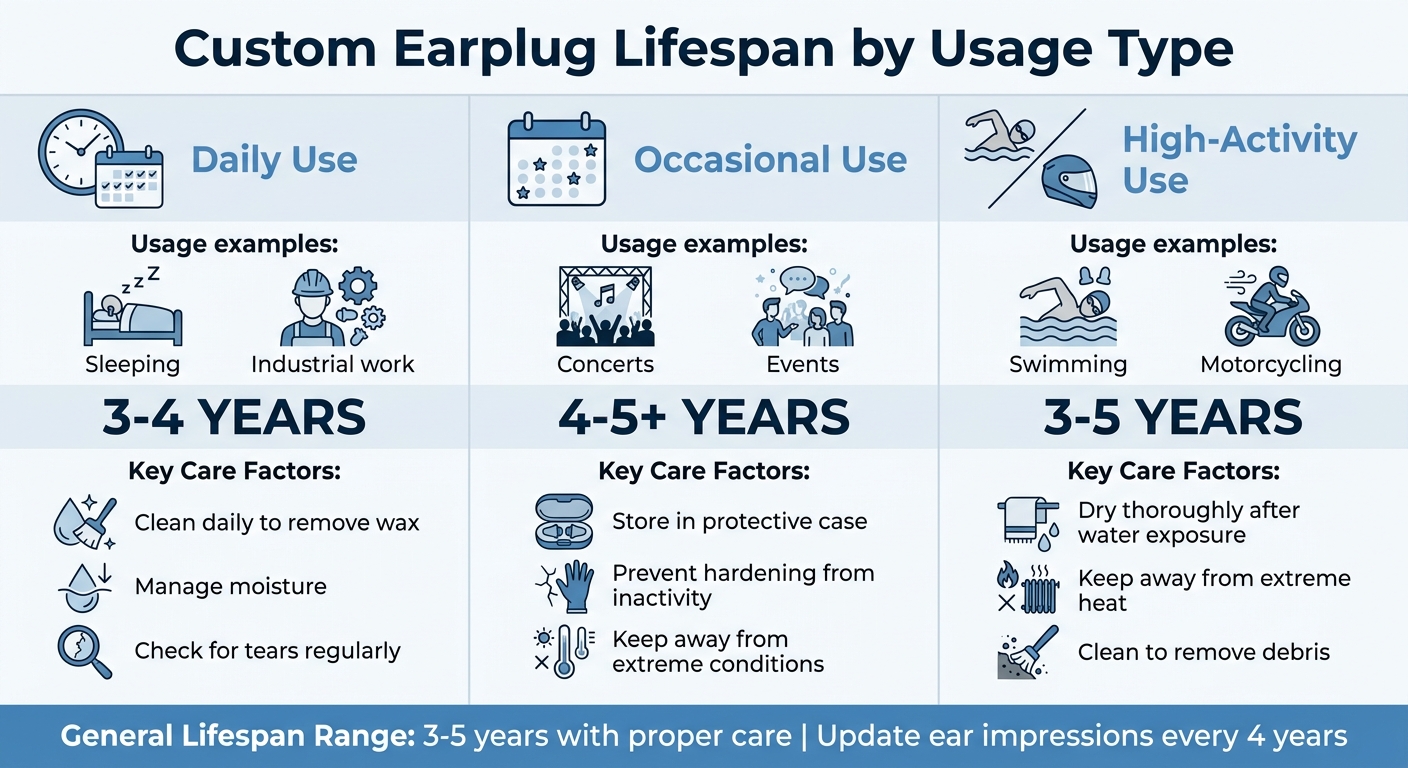
Custom Earplug Lifespan by Usage Type and Care Factors
Lifespan by Usage Type
How you use your earplugs plays a big role in how long they last. Daily wear puts more strain on the material compared to occasional use, which can extend their lifespan.
Here's a breakdown of how different usage patterns affect earplug longevity and the care routines that matter most:
| Usage Type | Average Lifespan | Key Care Factors |
|---|---|---|
| Daily Use (e.g., Sleeping, Industrial) | 3–4 Years | Clean daily to remove wax, manage moisture, and check for tears. |
| Occasional Use (e.g., Concerts, Events) | 4–5+ Years | Store in a protective case and prevent hardening from inactivity. |
| High-Activity (e.g., Swimming, Motorcycling) | 3–5 Years | Dry thoroughly after water exposure and keep away from extreme heat or debris. |
Let’s dive into how these scenarios impact the life of your earplugs:
Daily users, such as shift workers or those in industrial environments, typically see a lifespan of 3 to 4 years. In these cases, cleaning is critical - removing wax and managing moisture prevents the silicone from breaking down prematurely.
For occasional users, like concertgoers or motorsport fans, earplugs can last 4 to 5 years or even longer. Less frequent use means less wear and tear, but proper storage in a protective case is key to avoiding damage and keeping the material in good condition.
High-activity users, such as swimmers or motorcyclists, face unique challenges. Swimmers need to rinse earplugs after use and let them air-dry completely to avoid water damage. Motorcyclists should store earplugs away from engine heat and clean them regularly to remove sweat and grime from the road. These steps help maintain the 3 to 5-year lifespan even under tough conditions.
Conclusion
Extend the life of your custom earplugs by focusing on daily upkeep, proper storage, and replacing them when needed. With consistent care, they can protect your hearing for 3 to 5 years, depending on usage frequency.
Clean your earplugs regularly using mild soap and warm water, and store them in a cool, dry case to avoid wax buildup, material wear, and loss of shape. While maintenance is key, it’s also worth noting that natural changes in your ears can affect how well they work.
ACS Custom advises updating your ear impressions every 4 years, as ear canal shapes naturally shift over time.
Be vigilant for signs of wear, such as cracks, discomfort, or reduced noise reduction. These are clear indicators it’s time for a replacement. ACS Custom earplugs, made from 40 Shore Medical Grade Silicone with a durable lacquer finish, come with a 12-month warranty against build defects and a 60-day fit warranty. With a stellar 4.8/5 rating from over 2,000 customers, choosing high-quality materials and staying proactive with care ensures your earplugs are ready to protect your hearing when it matters most.
FAQs
Can custom earplugs be re-moulded as my ears change?
Custom earplugs can indeed be re-moulded if your ears change shape significantly. That said, this is rarely required because they are built to last around 4–5 years when properly cared for. Keeping them clean and performing routine maintenance can help extend their life and maintain a snug, comfortable fit.
How do I know the seal is failing if the earplugs look fine?
If you notice your earplugs aren’t reducing noise as effectively or feel less secure, even though they look fine, it might be a sign the seal is failing. This could happen due to material wear or a change in fit, both of which can affect their performance. Regularly inspecting your earplugs is essential to make sure they keep providing the protection you need.
What cleaning products should I avoid on silicone earplugs?
To keep your silicone earplugs in good condition, avoid harsh chemicals, alcohol-based cleaners, or abrasive products. These can break down the material, making the earplugs less durable and effective. Instead, opt for gentle cleaning methods to preserve their quality and performance.


