

When choosing earplugs, the decision often comes down to cost, comfort, and performance. Custom earplugs vs. foam earplugs comparisons often highlight that universal options are cheap and readily available but may not fit well or provide consistent noise protection. Custom earplugs, while more expensive upfront, offer a tailored fit, better comfort, and long-term value, especially for frequent use.
Key Points:
- Universal Earplugs: Affordable ($0.50–$20 AUD), easy to find, and good for occasional use. However, they can be uncomfortable, less effective if not properly inserted, and contribute to waste.
- Custom Earplugs: Cost $100–$200+ AUD but last 3–5 years. They provide a perfect fit, superior noise reduction, and are ideal for regular use (e.g., musicians, motorcyclists, FIFO workers).
Quick Comparison:
| Feature | Universal Earplugs | Custom Earplugs |
|---|---|---|
| Cost | $0.50–$20 AUD per pair | $100–$200+ AUD upfront |
| Durability | Disposable or short-term | 3–5 years |
| Fit | Generic, may not seal well | Tailored to your ears |
| Comfort | Can be uncomfortable | Designed for long wear |
| Noise Reduction | Inconsistent (22–33 dB) | Reliable (10–27 dB) |
| Best For | Occasional use | Regular/prolonged use |
If you need earplugs for daily or extended use, custom earplugs are a better investment. For one-off or infrequent needs, universal earplugs are a practical choice.
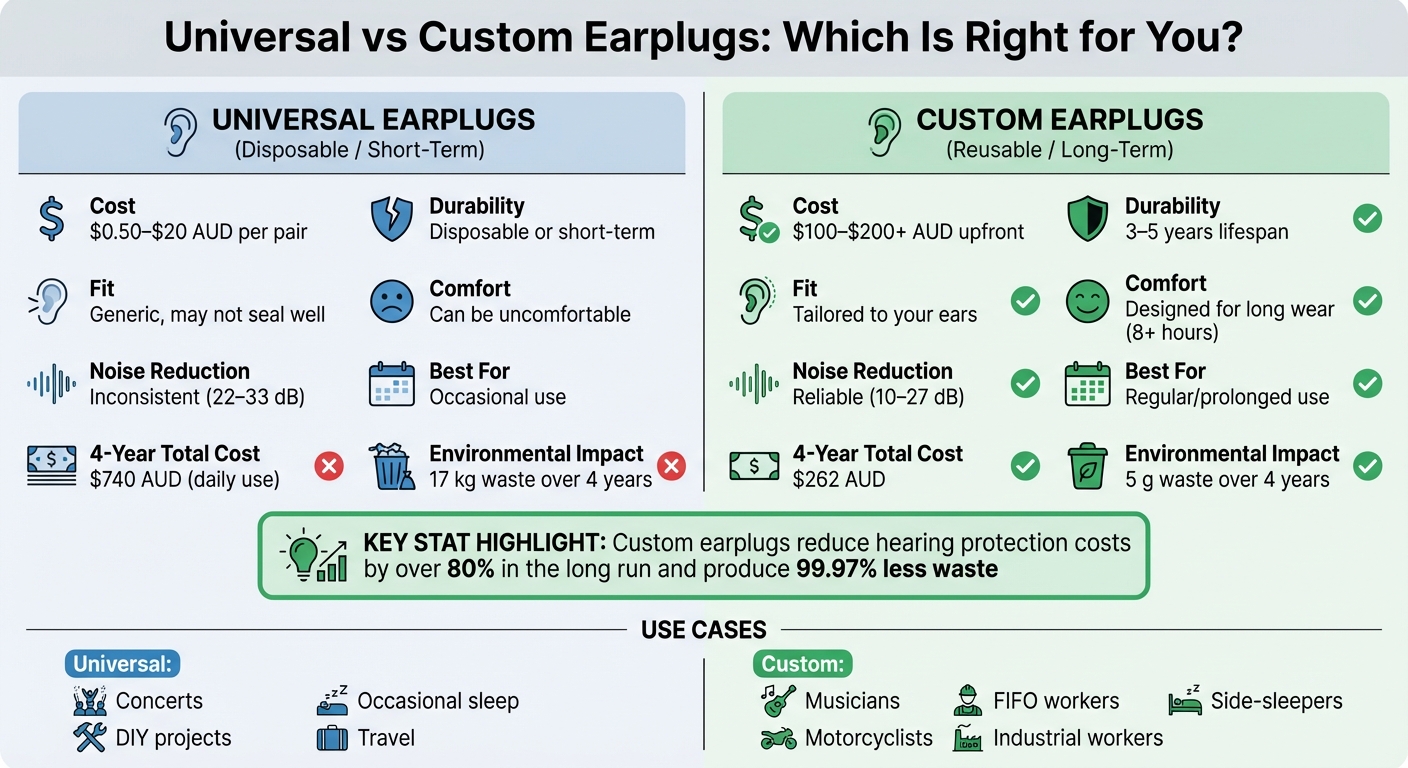
Universal vs Custom Earplugs Comparison Chart
Universal Earplugs: Pros and Cons
Benefits of Universal Earplugs
Universal earplugs offer an affordable and easily accessible solution for those seeking occasional hearing protection. They are budget-friendly and widely available, making them an excellent starting point for anyone new to protecting their ears.
One of their biggest advantages is immediate availability. You can pick up a pair from pharmacies, hardware stores, or even airport kiosks across Australia. This makes them a convenient option for last-minute needs, whether you're heading to a loud concert or dealing with unexpected noise from nearby construction.
Another plus is their versatility. Universal earplugs are made from different materials to suit various purposes - foam for general noise reduction, wax for a peaceful night's sleep, and silicone for swimming. Since they aren't custom-fitted, they can also be shared with others or kept as spares for visitors. As Dr. Jonathan Javid, an audiologist and founder of Hearing Insider, puts it:
"For occasional use, inexpensive plugs work fine."
While these advantages make universal earplugs appealing, they do come with some trade-offs.
Drawbacks of Universal Earplugs
The biggest downside to universal earplugs is their one-size-fits-all design, which often leads to an inconsistent fit. Ear canal shapes vary widely, and if the plug doesn't seal properly, its effectiveness drops - even with a Noise Reduction Rating (NRR) of 22 to 33 dB. Proper insertion is crucial to achieve the intended level of noise protection.
Comfort can also be a concern, especially during prolonged use. Many users experience discomfort, a sensation of blocked ears (known as the occlusion effect), and muffled sound that distorts both speech and music. Foam earplugs, in particular, tend to dampen all frequencies equally, which can negatively impact the quality of music.
Another issue is hygiene and waste. Disposable earplugs are meant for single use, but reusing them can pose hygiene risks. Additionally, they contribute to non-biodegradable waste, which is worth considering if you're using them frequently.
While universal earplugs are a convenient and economical choice, these limitations highlight the need to weigh their practicality against your specific needs.
sbb-itb-80b2a19
Custom Earplugs: Pros and Cons
Benefits of Custom Earplugs
Custom earplugs are designed using an exact mould of your ear, ensuring a snug and reliable seal that outperforms generic, one-size-fits-all options. This precise fit eliminates the variability often experienced with foam earplugs.
Made from soft, medical-grade silicone or acrylic, these earplugs are crafted for long-term comfort. Unlike foam plugs, which can expand unevenly and cause pressure build-up, custom earplugs fit naturally in the ear. Many also include ventilation to improve airflow and reduce the "plugged-up" feeling, known as the occlusion effect.
Their tailored design ensures they stay securely in place, even during high-intensity activities like exercise or when wearing helmets. This makes them a popular choice for side-sleepers and motorcyclists, thanks to their low-profile design that doesn’t interfere with comfort.
Custom earplugs are also a cost-effective and eco-friendly option. With proper care, they can last 3 to 5 years, replacing approximately 10 kg of disposable foam plugs over four years. While the initial cost ranges from $100 to $200+ per pair, they can reduce hearing protection expenses by over 80% in the long run. Dr. Jonathan Javid, a clinical audiologist, notes:
"In my clinic, I've seen many patients start with inexpensive foam plugs, but those who spend a lot of time in noisy environments... almost always upgrade to custom plugs over time for the comfort and consistency."
Drawbacks of Custom Earplugs
Despite their benefits, custom earplugs do have some downsides. The most noticeable is the upfront cost, which is significantly higher than disposable options. Additionally, they require a professional fitting, meaning you’ll need to schedule an appointment with an audiologist or hearing specialist to have impressions made. While the process is painless, it does require some planning.
Another drawback is the wait time. Unlike universal earplugs, which you can buy and use immediately, custom earplugs take about one to two weeks to manufacture after the impressions are taken.
Although the initial expense and fitting process may seem like hurdles, their durability and cost savings make them a worthwhile investment for frequent users. For those who need hearing protection multiple times a week, the cost is typically recouped within 9 to 12 months.
Are Custom Moulded earplugs worth the money?
Universal vs Custom Earplugs: Side-by-Side Comparison
If you're deciding between universal and custom earplugs, this detailed comparison breaks down the key differences to help you choose. The table below summarises how these two options perform across essential factors.
| Feature | Universal Earplugs | Custom Earplugs |
|---|---|---|
| Fit | Standard sizes aimed at "average" ears, often failing to create a complete seal | Tailor-made from individual ear impressions for a precise seal |
| Comfort | Can cause discomfort or irritation during long use; may stick out from the ear | Designed for extended wear (8+ hours) with a flush fit that works well with helmets or while side-sleeping |
| Noise Reduction | Effectiveness varies (NRR 22–33 dB); depends on proper insertion | Reliable protection with adjustable PRO filters offering 10–27 dB reduction |
| Durability | Disposable (single-use) or short-term reusable | Lasts 3–5 years with regular care |
| Cost (AUD) | $0.50–$0.90 per pair (disposable); reusable options around $20 per pair; approximately $740 over 4 years for daily use | $100–$200+ upfront; about $262 over 4 years |
| Best Use Cases | Occasional use, such as concerts, DIY projects, or temporary sleep | Perfect for regular use by musicians, industrial workers, motorcyclists, side-sleepers, or anyone frequently exposed to noise |
| Environmental Impact | Generates roughly 17 kg of non-recyclable waste per person over 4 years | Produces only about 5 g of waste over 4 years |
The numbers clearly show that while custom earplugs require a higher initial cost, they offer better long-term value for those who frequently need hearing protection. ACS Custom explains:
"Buying custom fitted hearing protection is an investment upfront that pays itself off. They are more durable, without (costly) maintenance, and they are therefore more cost effective."
This comparison underscores the advantages of custom earplugs, particularly in terms of comfort, durability, and consistent noise reduction. If you’re someone who regularly relies on ear protection, custom options might be worth the investment.
What to Consider When Choosing Earplugs
Selecting the right earplugs is about balancing noise reduction, comfort, and long-term practicality. Whether you're a FIFO worker trying to rest in noisy accommodation, a musician performing live, or a motorcyclist shielding your hearing from wind noise, understanding these factors will help you make a smarter choice. It all starts with how earplugs feel and perform, especially during extended wear.
Comfort and Fit
How earplugs fit can make or break your experience, especially if you need them for long periods. Universal foam earplugs, while widely available, are designed for "average" ear sizes. This often leads to discomfort, as they can create pressure in the ear canal or slip out during movement, particularly during overnight use or active shifts.
Custom earplugs, on the other hand, are tailored to the shape of your ears using precise impressions. Made from soft, medical-grade silicone, they prioritise comfort, even for extended periods like 8-hour work shifts or lengthy performances. For motorcyclists, custom plugs sit flush within the ear, ensuring they stay in place under a helmet - unlike foam plugs, which can easily dislodge. This secure fit is critical, especially when you consider that wind noise at speeds of 105 km/h can reach 100 dB, enough to cause hearing damage in as little as 15 minutes.
Noise Reduction and Standards
Comfort aside, the primary job of earplugs is to protect your hearing. In Australia, hearing protection must meet AS/NZS 1270:2002 standards, which classify protection levels into Classes 1 to 5 based on their noise reduction capabilities. For instance, Class 5 earplugs are essential for environments with extreme noise levels, such as mining sites or airports (105–110 dB), while Class 3 is suitable for moderately loud workplaces like manufacturing plants (95–100 dB).
Universal earplugs often come with impressive noise reduction ratings in lab tests, but real-world performance can fall short. Poor fit can reduce their effectiveness to just 6 dB of noise reduction. Custom earplugs, however, deliver a consistent seal and can be equipped with PRO series filters offering protection levels from 10 dB to 27 dB. These filters provide precise noise reduction without muffling sound. For musicians, flat attenuation filters in custom plugs lower the volume while preserving the clarity and frequency balance of the music.
Durability and Long-Term Value
When it comes to durability, custom earplugs outshine disposable options. While foam plugs are cheap upfront, they require frequent replacement, adding to both long-term costs and environmental waste. Custom earplugs, however, are built to last, with a typical lifespan of 4–5 years. They’re also non-porous and easy to clean with water and mild soap, unlike foam plugs, which can harbour bacteria if reused.
Investing in custom earplugs not only saves money over time but also reduces waste, making them a smarter and more sustainable choice. Plus, as your ear shape naturally changes with age, custom plugs can be updated to ensure they continue to provide the same level of comfort and protection.
When to Use Universal vs Custom Earplugs
Choosing between universal and custom earplugs depends on how often you’ll use them, the specific situation, and your comfort preferences. Each type has its strengths, so knowing when to pick one over the other ensures you get the right level of hearing protection.
When to Choose Universal Earplugs
Universal earplugs are perfect for occasional use. Disposable foam plugs, for instance, are ideal for events like a single concert, Australia Day fireworks, or even a weekend DIY project. They’re affordable, costing around $0.50 to $0.90 per pair, making them a practical solution for short-term needs.
"For occasional use, inexpensive plugs work fine. But if loud environments are part of your daily life - whether you're a musician, rider, or hunter - custom earplugs are a worthwhile investment." - Dr. Jonathan Javid, Au.D., Licensed Clinical Audiologist
That said, proper insertion is critical. If they’re not fitted correctly, their noise reduction abilities can drop significantly. For those exposed to loud noise more regularly, universal earplugs might not be the best long-term solution.
When to Choose Custom Earplugs
Custom earplugs shine when dealing with regular or prolonged noise exposure. They’re a better choice for those working in noisy industries like construction, manufacturing, or mining, where earplugs might be worn for 8-hour shifts or longer. Their tailored fit prevents the discomfort that foam plugs often cause during extended use. FIFO workers, who need quiet rest in noisy environments or while travelling, also benefit from custom sleep plugs. These plugs reduce noise effectively without creating pressure points, making them a great option for side-sleepers.
Certain groups, such as musicians, FIFO workers, motorcyclists, and hunters, gain additional advantages from custom earplugs. Musicians and audio professionals often use custom plugs with flat attenuation filters, which reduce volume while keeping the clarity and balance of sound intact. Motorcyclists, on the other hand, face wind noise that can reach 100 dB at speeds of 105 km/h - enough to cause hearing damage in just 15 minutes. Custom plugs stay secure under helmets and won’t dislodge like foam plugs during movement. Hunters and shooters also benefit from specialised custom plugs, such as the ACS Pro Impulse, which allow for normal conversations while blocking sudden, loud gunfire sounds.
These recommendations align with earlier points about fit, noise reduction, and long-term value, helping you pick the right earplugs for both immediate and ongoing protection needs.
How ACS Custom Creates Custom Earplugs
ACS Custom has developed a meticulous process to ensure their earplugs deliver an exact fit and superior comfort. It all starts when you place an online order and visit a professional audiologist or ear impression specialist to have precise impressions of your ear canals taken. These impressions capture the unique shape of your ear canal, ensuring a snug fit and an effective seal. Before your appointment, make sure your ear canals are clean and free of piercings.
Once your impressions are completed, they are sent in a sealed, padded envelope to ACS Custom. Here, each earplug is crafted using 40 Shore Medical Grade Silicone. This material is soft, flexible, hypoallergenic, and gentle on sensitive skin. To enhance durability, the earplugs are coated with a protective lacquer finish. This attention to detail results in a high-quality hearing protection solution.
"ACS are one of the only companies in the world who are renowned for making their IEMs from soft medical-grade silicone, so as well as fitting perfectly they are the most comfortable IEMs on the planet." - ACS Custom
The manufacturing timeline varies depending on the product. Pro Custom Earplugs are ready in about 20 working days, while Custom In-Ear Monitors take 5–6 weeks. A 60-day fit warranty is included, and it's recommended to update your impressions every four years to maintain an accurate fit.
ACS Custom products meet rigorous safety standards, including AS/NZS 1270:2002, BS EN352-2, and PPE Regulation (EU) 2016/425 certifications. They are classified as Class 3 and 5, ensuring reliable hearing protection.
This process delivers a product that combines unmatched comfort with a perfect seal - something generic earplugs simply cannot achieve. With over 2,000 customers giving ACS Custom an impressive 4.8/5 rating, their precision and commitment to quality stand out.
Conclusion: Choosing the Right Earplugs for Your Needs
When deciding on earplugs, consider how often you'll use them, the activities you need them for, and your budget. If it’s a one-off event like a concert or a flight, universal earplugs are an affordable and convenient choice. But for musicians, motorcyclists, industrial workers, or anyone needing daily hearing protection, custom earplugs are a more practical and long-term solution.
Custom earplugs come with an initial cost of about $262–$300 AUD and typically last 4–5 years. Compare this to disposable foam plugs, which cost around $190 AUD annually - adding up to $740 over four years - and generate 17 kg of waste, whereas custom plugs produce just 5 g of waste over the same period. The numbers clearly show the financial and environmental benefits of choosing custom earplugs.
For individuals with unique ear shapes where standard plugs might not stay put, or for those regularly exposed to noise levels above 85 decibels, custom-moulded earplugs provide a secure fit and consistent comfort. Options like ACS Custom's PRO Series even include interchangeable filters, allowing for tailored protection across various noise environments.
FAQs
How do I know what dB reduction I actually need?
To determine the level of noise reduction you need, start by assessing the noise levels you’re regularly exposed to. The goal is to bring these levels below 85 dB(A), which is the safety limit recommended by Safe Work Australia. Be cautious not to overdo it - excessive noise reduction can lead to discomfort and might make communication or awareness of your surroundings difficult. Select earplugs with an attenuation rating that matches your usual noise environment, ensuring they reduce noise effectively without going beyond what’s necessary.
How long does it take to get custom earplugs made in Australia?
Custom earplugs in Australia usually take 5 to 10 working days to be made. The timeframe can vary depending on factors such as the complexity of the fitting process and the specific provider you select.
How do I clean and care for custom earplugs?
To keep your custom earplugs clean, start by detaching any attachments. Wash the moulds gently using warm water and a mild soap, then allow them to dry thoroughly. Steer clear of harsh chemicals, alcohol-based cleaners, or fully submerging the earplugs in water, as this can cause damage. After each use, wipe them down with a clean cloth to remove any debris. Remember, foam tips can't be washed, so it's best to replace them regularly. Taking these steps will help maintain both hygiene and the lifespan of your earplugs.
Partnering for Your Hearing Health: earLAB & ACS Custom
At earLAB, we are proud to support the ACS Custom community by providing the clinical expertise necessary to protect and enhance your listening experience. Whether you are a musician, an audiophile, or an industry professional, your hearing health is our priority. Our Melbourne-based clinics offer a full suite of specialised services, including professional ear impression taking for a perfect ACS fit, safe microsuction earwax removal to ensure clear sound delivery, and comprehensive hearing tests to monitor your auditory health. As an independent clinic, we also provide expert hearing aid fittings and rehabilitation, offering unbiased advice on the latest technology tailored to your lifestyle. Book your appointment at locations to ensure your ears—and your ACS devices—are performing at their absolute best.
Related Blog Posts
- Foam vs Silicone vs Custom Earplugs: Full Comparison
- 7 Signs You Need Custom Hearing Protection at Work
- 5 Benefits of Custom In-Ear Monitors for Musicians
- Hearing Protection Checklist for Construction Workers


