

Custom earplugs are a powerful way to protect your hearing from noise-induced damage. They’re designed to fit your ears perfectly, offering superior comfort and precise noise reduction compared to standard foam or silicone plugs. Whether you’re exposed to loud environments at work, during recreation, or in everyday activities, custom earplugs can reduce harmful noise levels without distorting essential sounds like speech or music.
Key Points:
- Noise-Induced Hearing Loss (NIHL): Caused by exposure to sounds over 85 dB, with damage being permanent as inner ear hair cells don’t regenerate.
- High-Risk Groups: Workers in construction, manufacturing, musicians, motorcyclists, and shooting enthusiasts are particularly vulnerable.
-
Custom Earplugs Benefits:
- Tailored fit for better protection and stability.
- Comfortable for long-term wear.
- Noise filters that maintain sound clarity while blocking harmful levels.
- Long-lasting materials, typically lasting 3–5 years with proper care.
- Cost-Effectiveness: While they cost around $262 (excl. GST), they save money over time compared to disposable earplugs, which can cost up to $740 over four years.
Custom earplugs are an investment in your hearing health, offering tailored solutions for specific needs - whether it’s work, music, or recreational activities. Protect your hearing before it’s too late.
Why Custom Earplugs Are a Game Changer
When deciding on hearing protection, it helps to compare custom earplugs vs foam earplugs to see which offers the best long-term value.
sbb-itb-80b2a19
What is Noise-Induced Hearing Loss?
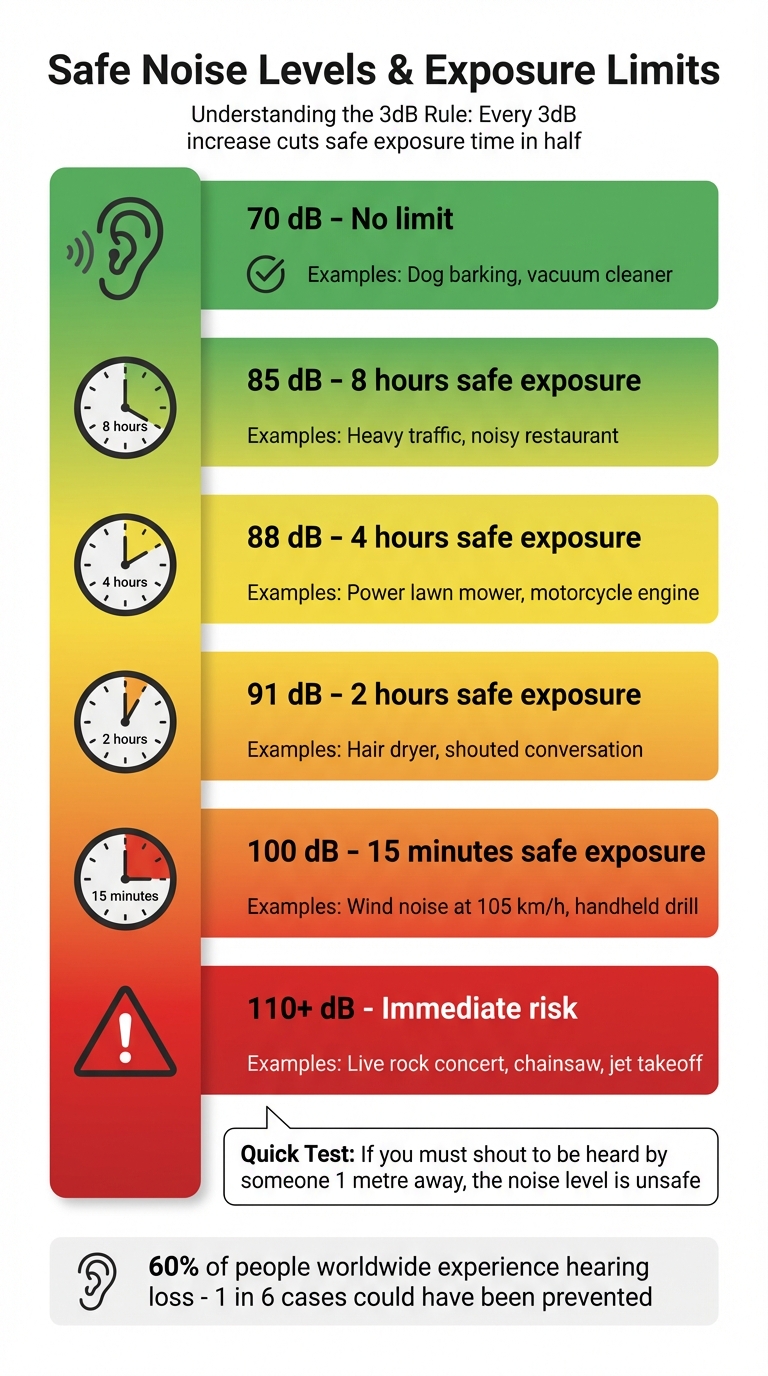
Safe Noise Exposure Levels and Duration Guide
Noise-induced hearing loss (NIHL) happens when loud sounds cause permanent damage to your hearing. This can occur suddenly, like from a loud explosion, or over time with repeated exposure to noisy environments.
Here’s how it works: sound waves travel into your ear, vibrating the eardrum and small bones in the middle ear. These vibrations move fluid inside the cochlea, a spiral-shaped structure in your inner ear. Tiny hair cells in the cochlea then convert these vibrations into electrical signals that your brain recognises as sound. But when exposed to excessive noise, these hair cells can become overworked, get damaged, or even die off.
The bad news? Once these hair cells are damaged, they don’t grow back, meaning the hearing loss is permanent.
"Unlike many other cells in the body, cochlear hair cells do not regenerate. Once they are damaged, the result is typically permanent hearing loss."
– The Audiology Place
This irreversible process is the foundation of NIHL, setting the stage for its causes and symptoms.
Causes and Symptoms of NIHL
Certain groups are more at risk of NIHL due to their exposure to loud environments. These include construction workers, musicians, factory workers, military personnel, and motorsports fans.
The symptoms often creep up slowly, making them hard to notice early on. You might find that speech sounds muffled or distorted, especially high-pitched sounds like birdsong or consonants such as "s", "f", "sh", and "th". Tinnitus - a constant ringing, buzzing, or roaring in your ears - is another common symptom. Many people also struggle to follow conversations in noisy settings like cafés or restaurants.
On a hearing test (audiogram), NIHL often shows a distinct "notch" where sensitivity drops sharply in the 3-4 kHz frequency range. There’s also something called "hidden hearing loss", where standard hearing tests appear normal, but people still have trouble understanding speech in noisy places. This happens due to damage to the auditory nerve or synapses.
Safe Noise Levels and Exposure Limits
Understanding how noise damages hair cells shows why controlling exposure is so important. The widely accepted safe noise level is 85 dB for up to 8 hours. Sounds below 70 dB are typically harmless.
But here’s the catch: noise damage works on a logarithmic scale. For every 3 dB above 85, your safe exposure time is cut in half. For example, at 88 dB, you’re safe for 4 hours; at 91 dB, only 2 hours. Live concerts, which can hit 100-120 dB, can cause permanent damage in just minutes.
| Noise Level (dB) | Safe Exposure Duration | Example |
|---|---|---|
| 70 dB | No limit | Dog barking, vacuum cleaner |
| 85 dB | 8 hours | Heavy traffic, noisy restaurant |
| 88 dB | 4 hours | Power lawn mower, motorcycle engine |
| 91 dB | 2 hours | Hair dryer, shouted conversation |
| 100 dB | 15 minutes | Wind noise at 105 km/h, handheld drill |
| 110+ dB | Immediate risk | Live rock concert, chainsaw, jet takeoff |
A simple rule of thumb is the one-metre rule: if you have to shout to be heard by someone one metre away, the noise level is unsafe. Smartphone apps like the NIOSH Sound Level Meter can also help you measure noise levels on the go.
The statistics are sobering: around 60% of people worldwide experience some form of hearing loss, and for 1 in 6 of them, it could have been avoided. This underscores the importance of protecting your hearing early.
Why Custom Earplugs Work Better
Custom earplugs stand out from standard options in three major areas: their tailored fit, superior comfort, and ability to offer targeted protection.
Custom Fit for Better Protection
The standout feature of custom earplugs is their precise fit. These earplugs are moulded to the exact shape of your ear canal, creating a snug acoustic seal that off-the-shelf foam or silicone plugs simply can't achieve. Audiologists use a soft impression material to capture every detail of your ear's contours, ensuring a fit that's both natural and gap-free.
"Because they form a perfect acoustic seal, custom earplugs Australia designed models offer better noise isolation than over-the-counter alternatives." – Cruise Audiology
This perfect seal allows for impressive noise reduction, typically ranging from 10dB to 27dB. The tailored design also ensures the earplugs stay securely in place, even during physical activities like operating machinery, performing music, or riding a motorcycle. This stability means you're consistently protected, no matter what you're doing.
Comfortable for All-Day Wear
Hearing protection is only effective if you actually wear it, and comfort plays a big role in that. Standard earplugs can feel awkward or irritating, often leading people to take them out. Custom earplugs, on the other hand, are crafted from soft, medical-grade silicone that’s biocompatible and shaped to fit your ear perfectly. This eliminates the discomfort that many people experience with foam alternatives.
"A properly fitted custom plug is more comfortable, secure, and unobtrusive than all other styles of hearing protection." – Pro Ears
This level of comfort is crucial for long-term use, whether you’re working long shifts, performing on stage, or even trying to get a good night’s sleep. Weighing less than 7 grams, these earplugs also minimise issues like pressure or sweat buildup, making them a practical choice for extended wear.
Designed for Your Specific Needs
Noise exposure varies, and custom earplugs can be tailored to address your specific environment. For musicians and DJs, high-fidelity filters reduce sound levels evenly across all frequencies, preserving the clarity and richness of music. Industrial workers benefit from solid plugs that block harmful noise almost entirely, while motorcyclists appreciate low-profile designs that fit comfortably under helmets, cutting wind noise while allowing intercom communication.
The PRO Series filters, for example, offer noise reduction levels between 10dB and 27dB. Additional features like cords or handles make them practical for construction sites, while waterproof materials are perfect for swimmers. With proper care, these earplugs can last for years, providing a long-term, cost-effective solution for protecting your hearing.
Next, we’ll look at how custom earplugs manage to balance noise reduction with maintaining sound clarity.
How Custom Earplugs Reduce Noise While Preserving Sound
Custom earplugs go beyond just providing a snug fit - they offer a smart way to manage noise while keeping sound quality intact. They lower harmful noise levels without sacrificing the clarity of essential sounds.
Precision Filters for Noise Reduction
The secret lies in the filters used in custom earplugs. These filters use a diaphragm and an acoustic bore to fine-tune sound, particularly around 2,700 Hz, which aligns with the ear's natural sensitivity. This helps achieve smooth and even sound attenuation.
The PRO Series filters are a great example, offering noise reduction ratings between 9 dB and 27 dB. For instance, a PRO-10 filter is ideal for vocalists or acoustic performers, as it provides lighter protection. On the other hand, the PRO-26 filter, with its 25–26 dB reduction, is perfect for loud environments like those experienced by percussionists or brass players. Many models even feature interchangeable filters, giving users the flexibility to adjust the level of protection. You can switch to lower attenuation for quieter, acoustic settings or higher attenuation for louder scenarios, such as heavy percussion performances.
For high-impact environments like shooting ranges or industrial settings, percussive filters are a game-changer. These are designed to block sudden, high-decibel sounds - think gunshots or machinery - while still allowing airflow. This ensures situational awareness and spatial hearing, both of which are crucial for safety.
This level of precision in noise reduction ensures that while harmful sounds are blocked, the clarity and richness of the sounds you want to hear remain intact.
Preserving Sound Quality and Clarity
Unlike standard foam earplugs, which tend to distort sound by unevenly blocking frequencies, custom earplugs are designed to reduce sound evenly across the frequency range of 125 Hz to 8 kHz. This means speech and music retain their natural quality.
"Flat-response high fidelity ear plugs instead use a filter to reduce sound levels evenly so that music and speech are clear and natural." – MEE audio
The PRO-17 filter, for example, is highly regarded for its natural sound. It delivers a flat frequency response and can handle noise levels up to 100 dB, making it a popular choice for musicians. In industrial settings, specialised filters are available to tackle specific challenges. They block low-frequency machine noise but still allow high-frequency sounds like speech or safety signals to come through clearly.
With these features, custom earplugs provide a balance of protection and sound quality, making them an excellent choice for a wide range of environments.
Where Custom Earplugs Are Used
Custom earplugs play an essential role in protecting hearing across a variety of settings, thanks to their ability to reduce noise and maintain sound clarity. Their tailored design makes them suitable for both workplace and recreational environments, addressing specific noise challenges effectively.
Construction and Manufacturing Sites
In construction and manufacturing, workers are often exposed to loud, constant noise from machinery and tools. Australian Work Health and Safety regulations recommend keeping noise levels below 85 dB, but many industrial environments frequently exceed this limit.
Custom-moulded earplugs provide a personalised solution. Made from impressions of the wearer’s ear canal, they form a complete anatomical seal that generic foam plugs simply can’t match. Constructed from medical-grade silicone, these earplugs not only adapt to the unique shape of the ear but also reduce pressure, making them ideal for long shifts. Depending on the design, they can reduce noise by 25 to 30 decibels.
Durability is another advantage. In dusty or dirty industrial settings, custom earplugs are easy to clean and built to withstand tough conditions, reducing the risk of infections. Workers can also choose filters tailored to their specific needs - such as a 27 dB filter for heavy machinery or a lower level for roles requiring clear communication. This customised approach ensures both comfort and the precise protection needed to prevent permanent hearing damage.
Beyond industrial use, custom earplugs are also a game-changer for musicians.
Music and Live Performance
Musicians face a unique challenge: they need to protect their hearing while preserving sound quality. Concert venues often hit sound levels of 100 to 115 dB SPL, where safe exposure is limited to just 15 minutes at 100 dB SPL and less than two minutes at 110 dB SPL.
Custom musician earplugs use precision filters to lower sound levels evenly, maintaining the natural balance of pitch and tone.
"Flat attenuation filters are like turning down the master volume on a mixing desk - everything stays in proportion, just quieter." – The Audiology Place
For singers and wind instrument players, custom moulds ensure a consistent acoustic seal, even during jaw movements. To achieve this, "open jaw" impressions are recommended to maintain the seal while the mouth is open. With proper care, these earplugs can last between 4 and 7 years. This tailored design not only ensures the comfort musicians need but also provides the critical protection required to prevent hearing loss.
After addressing the needs of musicians and industrial workers, custom earplugs prove equally effective for shooting and hunting enthusiasts.
Shooting and Hunting Activities
Shooting and hunting involve exposure to sudden, high-decibel sounds like gunfire, which require specialised hearing protection. Custom earplugs equipped with impulse filters, such as the PRO Impulse, are designed to respond instantly to loud noises. These filters offer a baseline noise reduction of around 15 dB, which increases to as much as 33 dB when activated by gunfire.
"The new PRO Impulse filter has been specially developed to reduce sudden high volume sounds from being transmitted to the inner ear, giving the wearer protection when they need it while allowing normal hearing at all other times." – ACS Custom
Filtered custom earplugs also allow hunters to hear ambient sounds, such as range commands or approaching wildlife, while protecting against harmful noise. Their low-profile design fits comfortably under over-ear shooting muffs, providing an additional 20–30 dB of noise reduction in extreme environments.
Caring for Custom Earplugs and Long-Term Value
Keeping your custom earplugs in top shape is just as important as their design when it comes to safeguarding your hearing.
Materials and Lifespan
Custom earplugs are crafted from durable, non-porous medical-grade silicone or acrylic. Silicone provides flexibility for long-term comfort, while acrylic offers a firmer fit that enhances sound isolation. Both materials are resistant to earwax, moisture, and bacteria, making them hygienic and long-lasting.
With proper care, these earplugs can last 3–5 years. However, how often you use them impacts their lifespan. Daily users, such as those in workplace settings, may need replacements after 2–3 years, while occasional users - like concert-goers or light sleepers - can expect them to last up to 5 years. In comparison, disposable foam earplugs often degrade after just one or two uses.
"With proper care, custom earplugs can last three to five years or even longer, making them a smart investment for regular users." – Sleep & Sinus Centers of Georgia
Cleaning and Storage Tips
To keep your earplugs in great condition, clean them regularly with mild soap and warm water. After washing, dry them thoroughly and store them in a protective case. Avoid exposing them to extreme heat or high humidity, as these conditions can damage the materials.
It’s also a good idea to check for signs of wear and tear, like cracks, tears, or discolouration, which might indicate it’s time for a replacement. Regular visits to a hearing professional can ensure that changes in your ear canal shape haven’t affected the fit.
Proper care not only keeps your earplugs performing at their best but also extends their lifespan, adding to their overall value.
Long-Term Savings Over Disposable Earplugs
While custom earplugs typically cost around $262 (excluding GST) for a four-year period, they often pay for themselves within 6–12 months of regular use. Over four years, disposable foam earplugs can add up to approximately $740, making custom earplugs a cost-effective choice in the long run.
"Buying custom fitted hearing protection is an investment upfront that pays itself off. They are more durable, without (costly) maintenance, and they are therefore more cost effective than other hearing protection." – ACS Custom AU
Beyond saving money, custom earplugs deliver better protection. Research shows they can achieve up to 90% of their rated effectiveness. In contrast, foam earplugs may lose up to 50% of their effectiveness due to improper use. Additionally, many custom models come with interchangeable filters, letting you adjust noise reduction levels for different environments without needing to buy new earplugs.
Conclusion
Noise-induced hearing loss is irreversible, but using proper hearing protection can prevent it. Custom earplugs offer an ideal solution, providing a snug acoustic seal, all-day comfort, and precision filters that lower harmful noise levels without distorting essential sounds.
"Once your hearing is gone, it's gone for good." – Cruise Audiology
Whether you're on a construction site, performing on stage, or at the shooting range, custom earplugs are designed for a tailored fit and balanced sound reduction. With proper care, they can last for years, making them a smart investment to protect your hearing.
The numbers are alarming - over 1 billion people globally are at risk of noise-induced hearing loss, and exposure to noise over 85 decibels for extended periods can lead to permanent damage. Don’t wait. Schedule a visit with an audiologist to get professional ear impressions, the first step toward preserving your hearing.
"Investing early in hearing protection earplugs can save you from major health and financial stress down the road." – Cruise Audiology
FAQs
What filter level do I need for my situation?
When it comes to choosing the right filter level for your earplugs, it all boils down to how much noise you're exposed to. Custom earplugs are available with varying levels of noise reduction. For moderate noise, filters offering a reduction of 10–20 dB might be enough. However, if you're in extremely loud environments, you'll want something stronger - filters that can reduce noise by up to 37 dB.
If maintaining sound clarity is important, such as during concerts or music production, consider high-fidelity filters. These are designed to lower harmful noise levels while keeping the sound quality intact. The key is to select a filter level that matches your specific surroundings and personal requirements.
How do I get ear impressions for custom earplugs?
To get custom earplugs, you'll need ear impressions made by a professional. Visit a fitting location where specialists will create a detailed mould of your ear canal and outer ear. This process ensures the earplugs are shaped perfectly for your ears. It's best to book an appointment at one of the many fitting points available across Australia.
Can custom earplugs make tinnitus less noticeable?
Custom earplugs can play a role in managing tinnitus by reducing noise exposure and safeguarding your hearing. By limiting exposure to harmful noise levels, they can help prevent further hearing damage and potentially stop tinnitus symptoms from escalating.
Partnering for Your Hearing Health: earLAB & ACS Custom
At earLAB, we are proud to support the ACS Custom community by providing the clinical expertise necessary to protect and enhance your listening experience. Whether you are a musician, an audiophile, or an industry professional, your hearing health is our priority. Our Melbourne-based clinics offer a full suite of specialised services, including professional ear impression taking for a perfect ACS fit, safe microsuction earwax removal to ensure clear sound delivery, and comprehensive hearing tests to monitor your auditory health. As an independent clinic, we also provide expert hearing aid fittings and rehabilitation, offering unbiased advice on the latest technology tailored to your lifestyle. Book your appointment at locations to ensure your ears—and your ACS devices—are performing at their absolute best.
Related Blog Posts
- How to Choose Custom Earplugs for Your Industry
- 7 Signs You Need Custom Hearing Protection at Work
- Custom vs Universal Earplugs: Which Is Right for You?
- How to Get Custom Moulded Earplugs: Step-by-Step Guide


