

When choosing earplugs, safety and compliance matter. Here's what you need to know:
- Custom earplugs are moulded to fit your ears, providing a reliable seal for consistent noise reduction. They comply with AS/NZS 1270:2002, ISO 9001:2015, and European standards (SNR ratings). Made from medical-grade silicone, they are durable, comfortable, and effective, with noise reduction ranging from 10dB to 31dB. They cost more upfront (AUD $300.00+), but last longer and offer tailored protection.
- Standard earplugs, while cheaper and compliant with AS/NZS 1270:2002, often lack a consistent fit due to their generic design. This can reduce their effectiveness, especially in high-noise environments. They are disposable and rely heavily on proper insertion for optimal performance.
Quick Takeaway: Custom earplugs are a better choice for consistent, long-term hearing protection, especially in noisy workplaces or events. Standard earplugs are suitable for short-term, less demanding use but may not provide reliable protection over time.
Quick Comparison
| Feature | Custom Earplugs | Standard Earplugs |
|---|---|---|
| Certifications | AS/NZS 1270:2002, ISO 9001:2015, SNR ratings | AS/NZS 1270:2002 |
| Fit | Individually moulded, perfect seal | Generic sizing, inconsistent fit |
| Noise Reduction | Reliable, adjustable (10dB–31dB) | Variable, depends on insertion |
| Durability | Long-lasting | Disposable, short-term use |
| Cost | AUD $300.00+ | Lower upfront cost |
For workplaces exceeding 85 dB(A) or environments requiring precise noise reduction, custom earplugs are the safer, more consistent option.
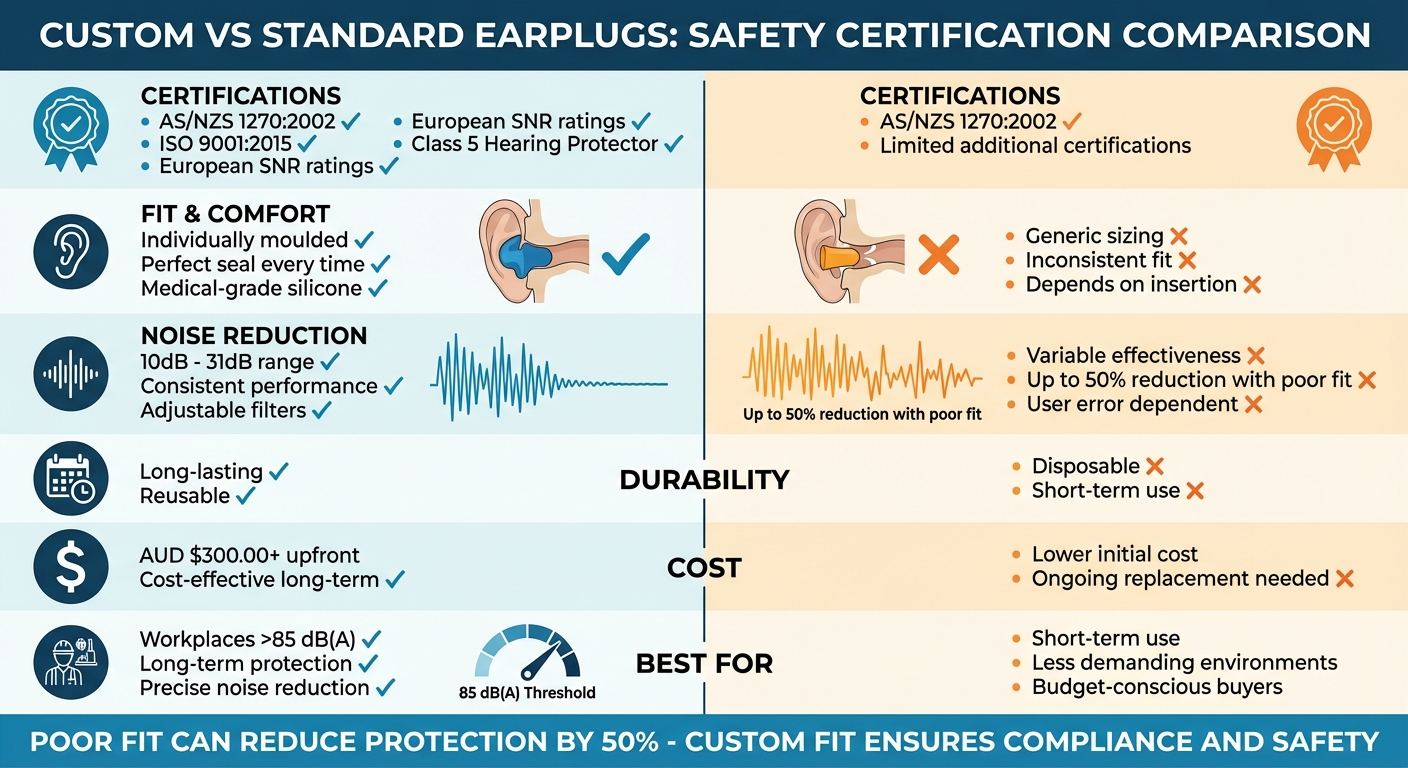
Custom vs Standard Earplugs Safety Certification Comparison Chart
Australian Safety Standards for Earplugs
AS/NZS 1270:2002: Australian Standard for Hearing Protectors
The AS/NZS 1270:2002 standard sets the benchmark for hearing protectors in Australia and New Zealand. Before earplugs hit the market, they undergo strict noise attenuation tests to ensure their effectiveness. This standard also introduces a classification system, ranging from Class 1 (offering the least protection) to Class 5 (providing the highest level of protection). This makes it easier for users to choose earplugs suited to specific environments - whether it's a mining site, an aviation setting, or a loud music event [3]. The rigorous nature of this standard complements quality management systems like ISO 9001:2015, which further enhance product reliability.
ISO 9001:2015: Manufacturing Quality Certification
ISO 9001:2015 certification ensures that earplug manufacturers follow consistent and high-quality production methods. This certification is particularly important for products like custom earplugs vs. foam earplugs, as it guarantees they are made using proven medical-grade processes. For custom-moulded earplugs, maintaining a reliable noise seal over time is critical, and ISO 9001:2015 helps ensure these products meet strict safety and performance criteria .
European and International Standards (SNR Ratings)
Beyond the AS/NZS 1270:2002 standard, European standards such as BS EN352-2 offer additional performance data through Single Number Rating (SNR) values. These ratings, which measure decibel reductions (commonly 12, 15, 17, 20, 27, and 31), provide a more detailed analysis of an earplug's noise reduction capabilities. SNR ratings are especially valuable in environments where precise noise reduction is essential. Many high-quality earplugs are certified to meet both Australian and European standards, ensuring they comply with strict safety and environmental requirements across various industries.
sbb-itb-80b2a19
How Custom Earplugs Meet Safety Standards
Custom Fit Delivers Consistent Performance
Custom earplugs are designed to create a perfect seal every time they're used. By being moulded from precise ear impressions, they ensure a consistent fit. This reliability is essential for maintaining the noise reduction levels outlined in AS/NZS 1270:2002. Their deep-fit design blocks sound before it reaches the inner ear, avoiding the occlusion effect and providing dependable protection in various settings.
Medical-Grade Materials in Custom Earplugs
The quality of materials used in custom earplugs plays a key role in their effectiveness. Made from soft, medical-grade silicone, these earplugs conform to the unique shape of your ear and resist moisture. This ensures they maintain consistent noise reduction, whether you're in a humid industrial environment or under the heat of stage lights.
ACS Custom: Certified Custom Earplugs
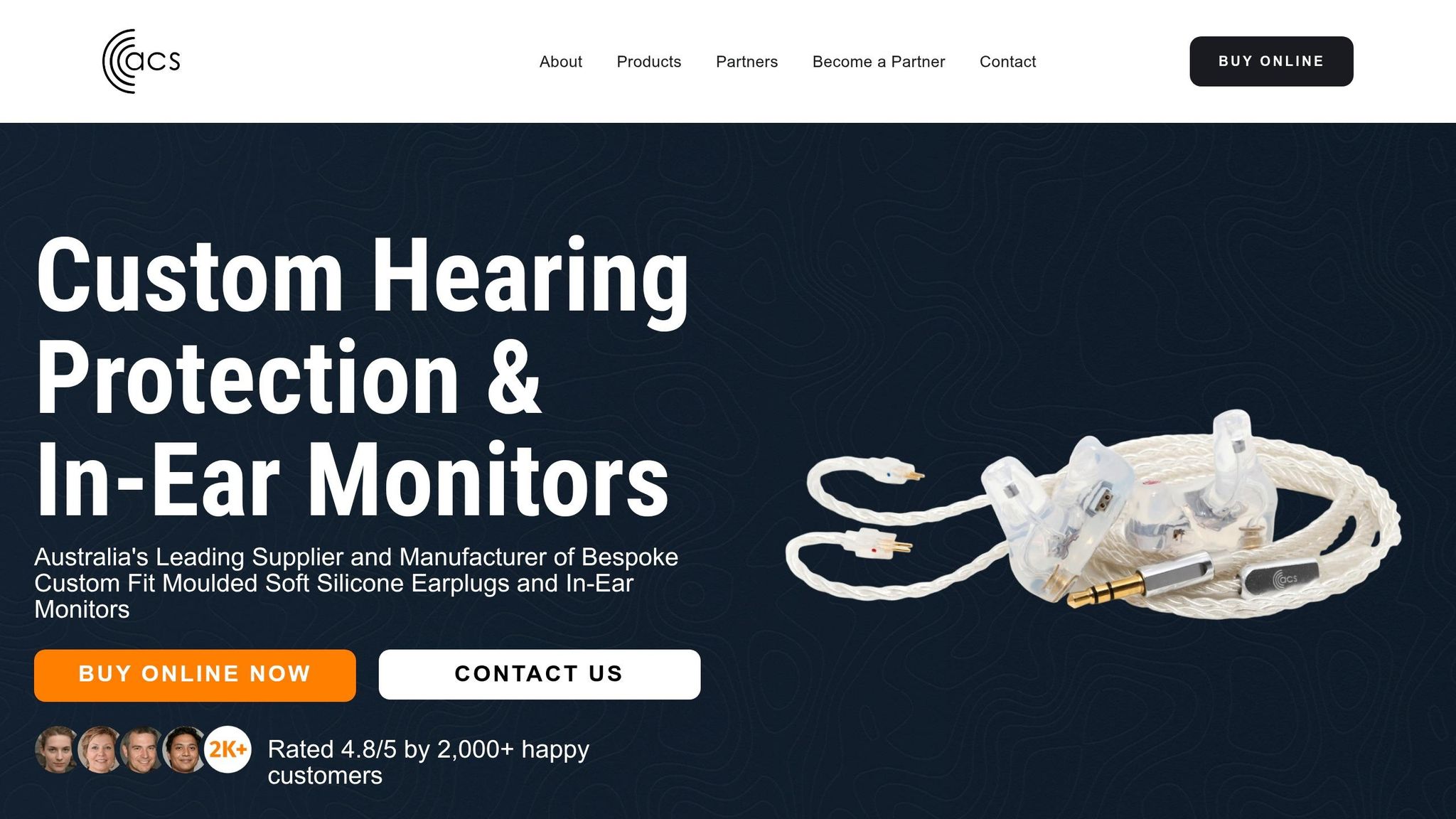
ACS Custom sets a high standard with its PRO series earplugs. The PRO31 model meets AS/NZS 1270:2002 as a Class 5 Hearing Protector and complies with EN352-2, offering SNR ratings between 15dB and 31dB. Manufactured under ISO 9001:2015, each pair includes custom moulds, certified filters, and a carry pouch, all priced at AUD $300.00. For an additional AUD $20.00, users can opt for customisations. The interchangeable filter system also allows users to adjust protection levels - such as switching between PRO27 and PRO31 - while maintaining the certified seal.
Standard Earplugs: Certifications and Limitations
Safety Compliance for Standard Earplugs
In Australia, standard earplugs must comply with AS/NZS 1270:2002, ensuring they meet strict requirements for design, material safety, and noise reduction. This standard involves detailed testing, including assessments of Mean Attenuation and Standard Deviation, to confirm their effectiveness and safety for prolonged use in the ear canal. Products that meet these standards are made from non-irritating materials, suitable for extended wear. When shopping for earplugs intended for industrial or high-noise environments, always check the packaging for explicit mention of AS/NZS 1270:2002 compliance. However, even with this certification, standard earplugs come with practical limitations.
Fit and Performance Limitations
Standard earplugs are designed as a one-size-fits-all solution, which often makes achieving a consistent seal challenging. While laboratory tests assume a perfect fit, this is rarely the case in real-world scenarios. Generic sizing, whether foam or silicone, can struggle to create a complete airtight seal, particularly for individuals with uniquely shaped ear canals. This means users may not experience the full noise reduction levels advertised.
To maximise protection, it’s essential to perform a fit check every time you wear them. Without a proper seal, the earplugs’ ability to block noise drops significantly. Furthermore, standard earplugs can become uncomfortable during extended use, leading to improper placement or early removal. This not only reduces their effectiveness but also makes it harder to maintain consistent safety compliance in workplace settings.
Custom vs Standard Earplugs: Safety Certification Comparison
Comparison Table: Custom vs Standard Earplugs
When it comes to ear protection, both custom and standard earplugs must adhere to AS/NZS 1270:2002. However, their actual performance in everyday use can vary quite a bit. Here's a closer look at how they stack up:
| Feature | Custom Earplugs | Standard Earplugs |
|---|---|---|
| Safety Certifications | Certified under AS/NZS 1270:2002, ISO 9001:2015, and SNR ratings; verified with Personal Attenuation Rating (PAR) testing | Meets AS/NZS 1270:2002 standards but relies on Noise Reduction Rating (NRR), which often overestimates protection |
| Fit and Comfort | Individually moulded from ear impressions for a precise seal; made with medical-grade silicone for extended wear | Generic design; fit varies widely based on insertion technique and ear canal shape |
| Noise Reduction Performance | Offers consistent, repeatable attenuation (e.g., ACS PRO filters: 10dB to 27dB); flat-attenuation options maintain sound clarity | Heavily reliant on proper insertion; NIOSH suggests derating NRR due to inconsistent real-world outcomes |
| Durability | Long-lasting and cost-efficient over time despite higher upfront cost | Disposable or short-term use; foam materials degrade quickly |
| Consistency | Provides reliable protection every time thanks to the custom fit | Susceptible to user error, leading to inconsistent protection with each use |
This table highlights the key reasons custom earplugs tend to outperform standard ones in real-world scenarios. While standard earplugs may achieve their Noise Reduction Rating (NRR) in controlled lab settings, their performance often falters in everyday conditions. Custom earplugs, on the other hand, eliminate variability caused by user error, reliably delivering the certified level of protection. For workers needing specific noise reduction (e.g., 10 dB for environments between 75–85 dBA), custom earplugs with tailored filters provide precise and dependable results.
According to the CDC/NIOSH, "Individual hearing protector fit testing is the best way to check if each worker is getting the amount of protection needed".
Custom Earplugs Custom Hearing Protection VS and Generic Ear Plugs Generic Hearing Protection Why?
Conclusion: Selecting Earplugs for Safety and Compliance
When it comes to earplugs, ensuring safety and compliance means prioritising certifications and a proper fit.
What to Look for When Choosing Earplugs
Start by checking for the AS/NZS 1270:2002 certification on the packaging. This standard confirms the earplugs meet Australia's minimum acoustic performance requirements. Additionally, look for ISO 9001:2015 certification and an SNR (Single Number Rating) of at least 25 dB for effective noise reduction.
Fit is equally important. A poor fit can reduce protection by as much as 50%, leaving you exposed to harmful noise levels and risking WHS non-compliance. Fines for non-compliance can reach up to AU$300,000. If your workplace exceeds 85 dB(A) - common in industries like construction, mining, or live music - consider performing a fit test or consulting an audiologist for custom earplugs.
By following these guidelines, you can ensure both compliance with regulations and optimal hearing protection.
Why Choose ACS Custom
ACS Custom ticks all the boxes for safety and performance. Their earplugs not only comply with AS/NZS 1270:2002 and ISO 9001:2015 standards but are also made from medical-grade silicone for durability and comfort. The PRO series offers tailored SNR ratings ranging from 10 dB to 31 dB, with the PRO31 classified as a Class 5 Hearing Protector - ideal for extreme noise conditions. Each pair is custom-moulded to ensure a perfect fit.
With a 4.8/5 customer rating, ACS Custom earplugs provide dependable, regulation-compliant protection. Whether you're in industrial settings, on a shooting range, or performing on stage, these custom earplugs deliver reliable and consistent hearing protection.
FAQs
How do I choose the right earplug class for my workplace noise level?
To select the right earplug class, start by evaluating the noise levels and safety requirements of your workplace. Custom-moulded options, such as those from ACS Custom, provide a personalised fit, ensuring better protection, comfort, and hygiene. These are particularly useful in fields like construction or aviation where noise exposure is significant.
If you're dealing with noise levels exceeding 85 dB or need earplugs for extended use, look for products compliant with Australian standards (AS/NZS 1270:2002). Some come with filters that maintain speech clarity while reducing harmful noise. For environments with extreme noise, earplugs in higher classes, like Class 5, deliver the most robust protection.
What’s the difference between SNR, NRR and PAR fit testing?
Hearing protection is evaluated using three main methods: SNR, NRR, and PAR.
- SNR (Single Number Rating): This is a European standard that indicates the average noise reduction provided by hearing protection devices. It's a general measure to help users understand the product's effectiveness.
- NRR (Noise Reduction Rating): Commonly used in the US, this rating estimates the decibel reduction based on laboratory tests. It gives a baseline of how much noise the device can block under controlled conditions.
- PAR (Personal Attenuation Rating): Unlike the other two, PAR assesses the actual noise reduction achieved when the device is worn. It focuses on individual fit, ensuring the user gets both proper protection and maximum safety.
While SNR and NRR are standardised ratings, PAR takes personal fit into account, making it particularly valuable for ensuring effective hearing protection in real-world use.
How often should custom earplugs be replaced or re-moulded?
Custom earplugs generally need replacing or re-moulding every 4 to 5 years to ensure they continue to fit well and offer the protection you need. However, this timeline can shift depending on how often they're used and the level of wear they experience.


